
CAGR Insights is a weekly newsletter full of insights from around the world of the web.
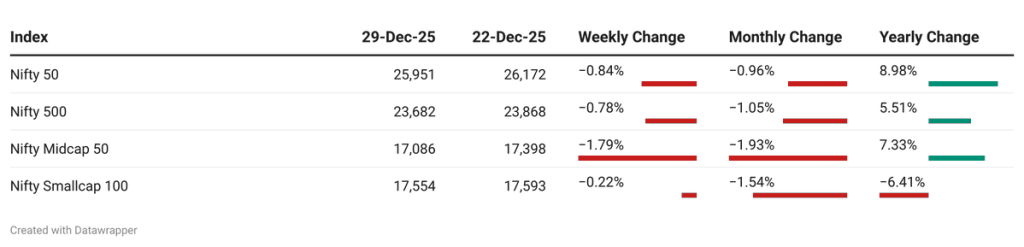
Chart Ki Baat
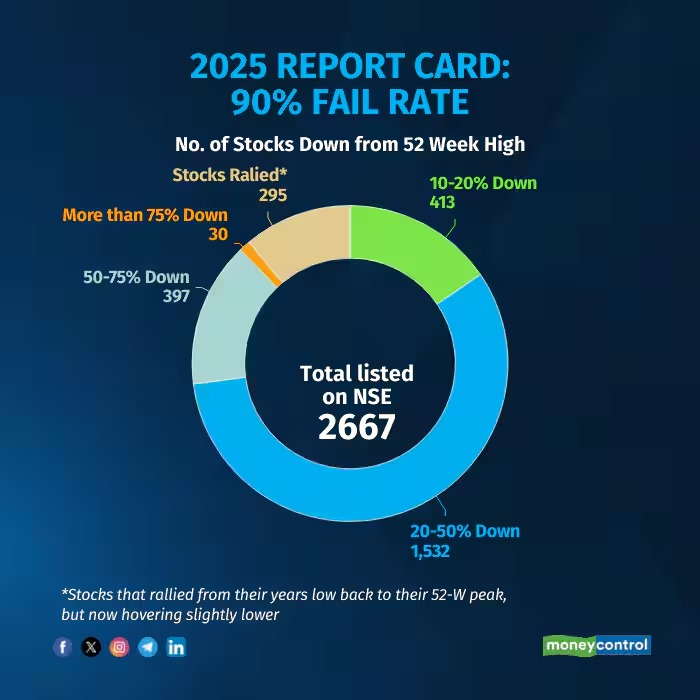
Gyaan Ki Baat
NPS Withdrawal Rules: A Welcome Relief at Retirement
Retirement planning often feels rigid, but recent changes in NPS withdrawal rules have brought much-needed flexibility. Earlier, at age 60, subscribers could withdraw only 60% of their NPS corpus as a lump sum, while the remaining 40% had to be compulsorily invested in an annuity. This later evolved into an 80:20 structure, allowing up to 80% withdrawal, though the additional 20% was taxable as per the individual’s income-tax slab.
Now comes a significant relief. If your total NPS corpus at retirement is ₹8 lakh or less, you can withdraw 100% of the amount with no mandatory annuity purchase. This change is especially beneficial for individuals with a modest retirement corpus, as it improves liquidity and gives greater financial control at a crucial life stage.
Example:
Consider a retiree with an NPS balance of ₹7.5 lakh at age 60. Under the new rule, the entire amount can be withdrawn in one go. As per current tax provisions, 60% (₹4.5 lakh) remains tax-free, while the remaining ₹3 lakh is taxable based on the retiree’s applicable income-tax slab.
This update makes NPS more practical, flexible, and aligned with real retirement needs putting the power of choice back in the hands of investors.
Personal Finance
- Beyond Fixed Deposits: Where India’s Rich Really Park Their Short-Term Cash: HNIs manage short-term money through tax-efficient mutual funds, not FDs or savings accounts. Liquid and arbitrage funds offer liquidity with better post-tax returns. As horizons increase, they shift to equity savings, hybrid, and equity funds ensuring idle cash stays productive without sacrificing access or risk control. Read here
- Risk-Averse India: Only 1 in 10 Households Invest in Securities Despite Awareness: A SEBI led nationwide survey found only 10% of Indian households invest in securities despite 63% awareness. Participation is higher in urban areas than rural. Key barriers include low financial literacy, product complexity, and fear of losses, though 22% of aware non-investors plan to invest soon. Read here
- GST Relief Triggers Shift to Higher Health Insurance Covers: Indian consumers are upgrading insurance, not just buying more. Post-GST removal, health cover sizes rose sharply, with higher sums insured, longer tenures, and growing adoption of unlimited plans. Demand is increasingly driven by Tier 3 cities and younger buyers, signalling smarter, long-term protection choices. Read here
Investing
- Private Investment Still Lags Despite Reforms, Raising Growth Concerns: Despite strong government infrastructure spending and GST-led consumption growth, private investment in India remains weak. New project announcements have declined, capex intentions fell sharply for FY26, and private investment’s GDP share stays stagnant. Structural issues, cautious demand, and global uncertainty continue to restrain a sustained private capex revival. Read here
- SGB Final Redemption: How a ₹1 Lakh Gold Bond Investment Became ₹4.82 Lakh: The RBI has set the final redemption price of SGB 2017-18 Series-XIII at ₹13,563 per unit for December 26, 2025. Issued at ₹2,816–₹2,866 per gram in 2017, the bond delivers an absolute return of about 382%, excluding interest, reflecting strong long-term gold price appreciation. Read here
- Why Global Investors Are Betting Big on Indian Banks?: Foreign investors are pouring nearly $15 billion into Indian banks and financial firms, signalling strong global confidence. Drawn by rapid economic growth, digital infrastructure, underbanked markets and a cleaned-up banking system, global players see India as a stable, long-term opportunity, with potential reforms likely to attract even more capital. Read here
Economy & Sector
- Explained: How UPI and Digital Payments Are Transforming India’s Growth Story: Digital payments have become central to India’s economy, led by UPI, cards, wallets and Aadhaar-based systems. With UPI crossing 20 billion monthly transactions and biometric authentication on the way, digital payments boost transparency, GDP contribution, and growth, positioning India as the global leader in real-time payments. Read here
- India Defies Odds, Faces Global Headwinds: India’s 2025 economy remained resilient despite global uncertainty, achieving ~8% GDP growth with low inflation. RBI rate cuts, GST 2.0 reforms, and middle-class tax relief bolstered demand. Markets reached record highs amid volatility. Trade pacts expanded international reach, while rupee weakness, tariffs, and global challenges persisted. Read here
****
That’s it from our side. Have a great weekend ahead!
If you have any feedback that you would like to share, simply reply to this email.
The content of this newsletter is not an offer to sell or the solicitation of an offer to buy any security in any jurisdiction. The content is distributed for informational purposes only and should not be construed as investment advice or a recommendation to sell or buy any security or other investment or undertake any investment strategy. There are no warranties, expressed or implied, as to the accuracy, completeness, or results obtained from any information outlined in this newsletter unless mentioned explicitly. The writer may have positions in and may, from time to time, make purchases or sales of the securities or other investments discussed or evaluated in this newsletter.