CAGR Insights – 6 Feb 2026

CAGR Insights is a weekly newsletter full of insights from around the world of the web.
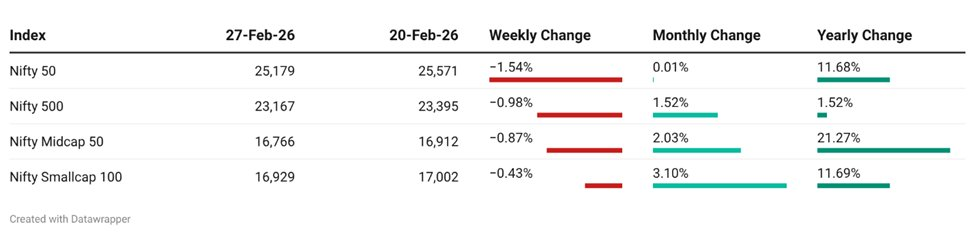
What we’re reading this week

Domestic Investors Are Changing the Market Story – Read here

Sebi proposal could simplify withdrawals from demat mutual funds – Read here

Why India is resetting GDP and CPI base years and what the change means – Read here

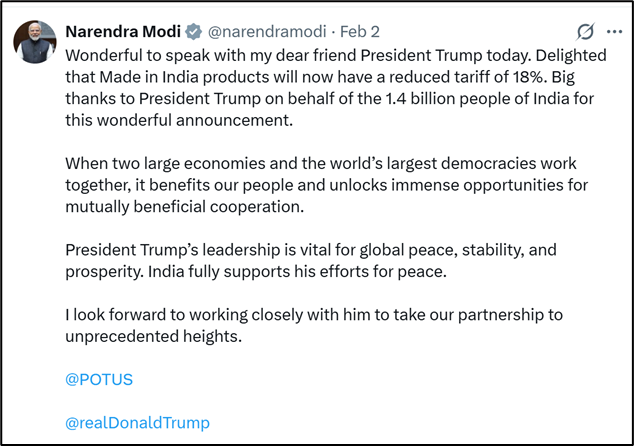
US-India Trade Deal: A Game Changer or Political Gamble?

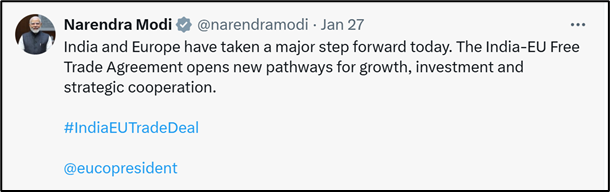
India signed two big trade agreements in just two weeks.

But they are quite different in their structure.

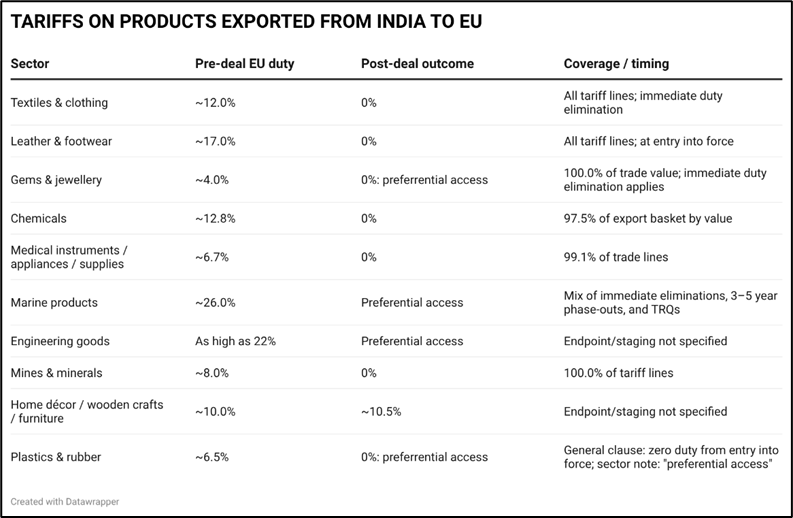
One is a full-fledged Free Trade Agreement (FTA) with the European Union—structured, rule-based, and built for the long haul.
The other is a “deal” with the United States.

And that word—deal—changes everything.

And while we will talk about EU FTA deal in detail in our next newsletter, today we will focus on what the US “deal” means for us and our economy.

Unlike an FTA, the US–India arrangement doesn’t come with iron-clad institutional safeguards. It’s far more dependent on political sentiment. And when the dealmaker is Donald Trump, mood swings aren’t a footnote—they’re a risk factor. A single shift in narrative, and what’s agreed today can be questioned tomorrow.

So, before we celebrate both agreements in the same breath, it’s worth pausing. Because one of these is clearly not like the other.

But to understand where this deal might take us, we first need to rewind.

So, let’s go back to where it all started.

Table 1.1

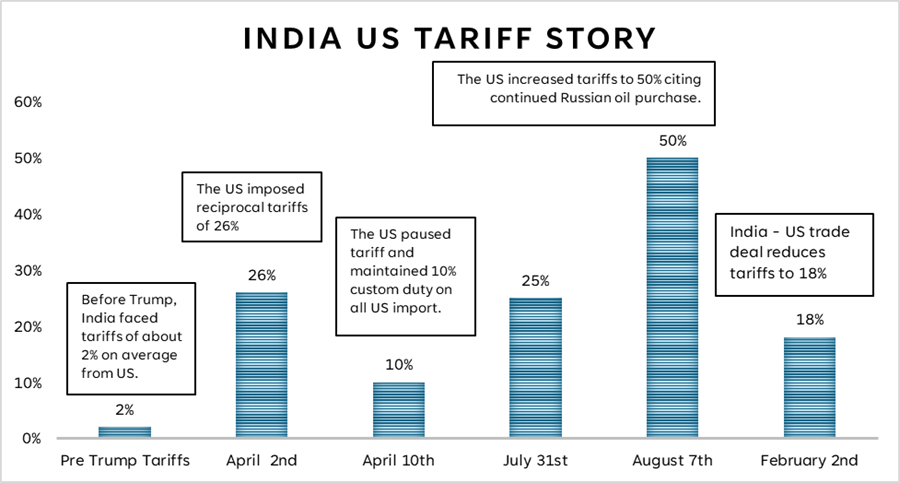
The tariff dispute dates back to early 2025, when the Trump administration, pursuing a tough trade agenda, launched a series of tariffs under what it called “reciprocal tariff” policies aimed at reducing the US trade deficit with major partners.

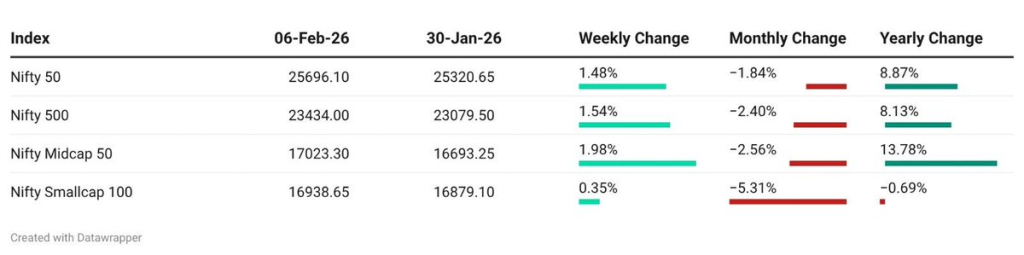
This was the biggest overhang on Indian markets and with favorable outcome on this front, equity markets are poised for gains.

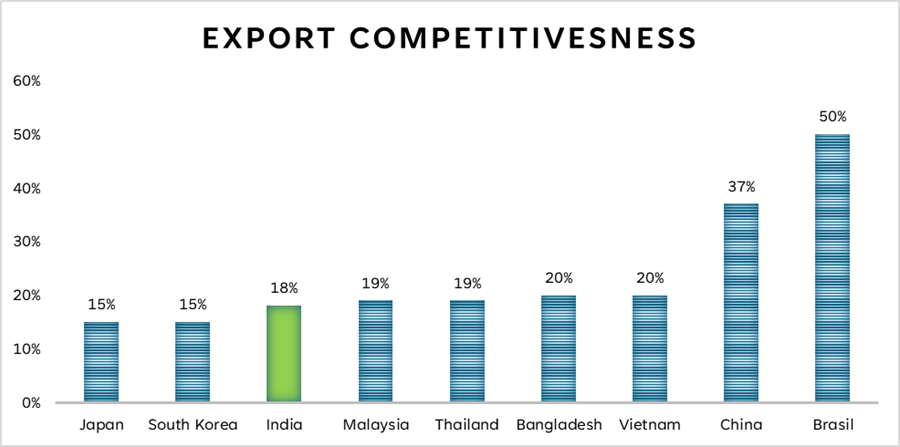
India now has a lower tariff rate than ASEAN countries. Most of them are stuck at 19%, with Vietnam at 20%. Further, China is subject to additional penalties for trans-shipment of Chinese goods. All of this together makes it competitively better for Indian exporters.

Table 1.2

It is perversely entertaining that 18% is now considered an awesomely “low” tariff rate given that we were at a very low rate till a few quarters before. But given the circumstances, this is nonetheless a boon to India.

Let us see why.

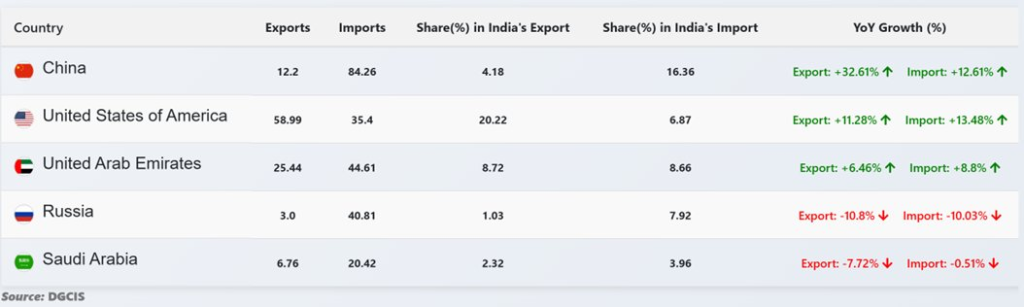
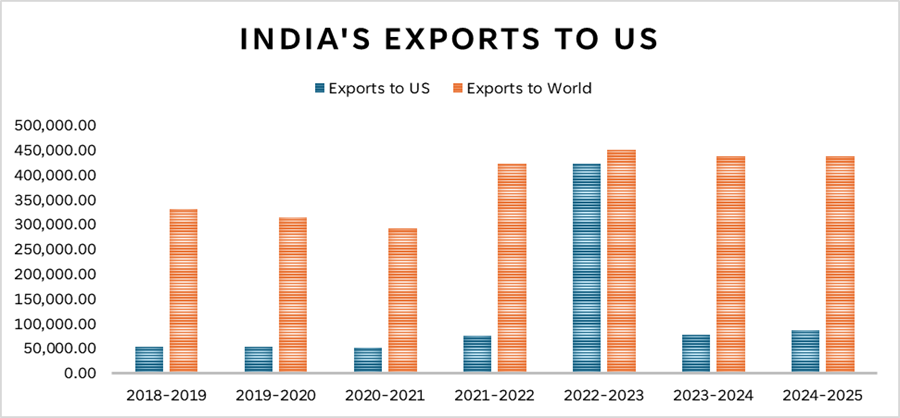
The US has been one of India’s most important export destinations for decades. In 2024-25, almost 20% of our exports went to the US (Table 1.1). And this is not just last year. Our exports to the US has always been a substantial portion of our exports (Table 1.2).

Against that backdrop, this deal marks a pivotal moment in India’s trade history.

Table 1.3

Table 1.4

If the deal holds—and if it survives Trump’s occasional policy frenzies—it could do more than just boost trade numbers. It may well act as the spark that reignites momentum in Indian equity markets, especially in sectors closely tied to exports and global demand.

No official fact sheet has been released regarding the deal, but we have tried to analyze the sectoral impact of this deal.

Tariff relief, not normalization

Table 1.5

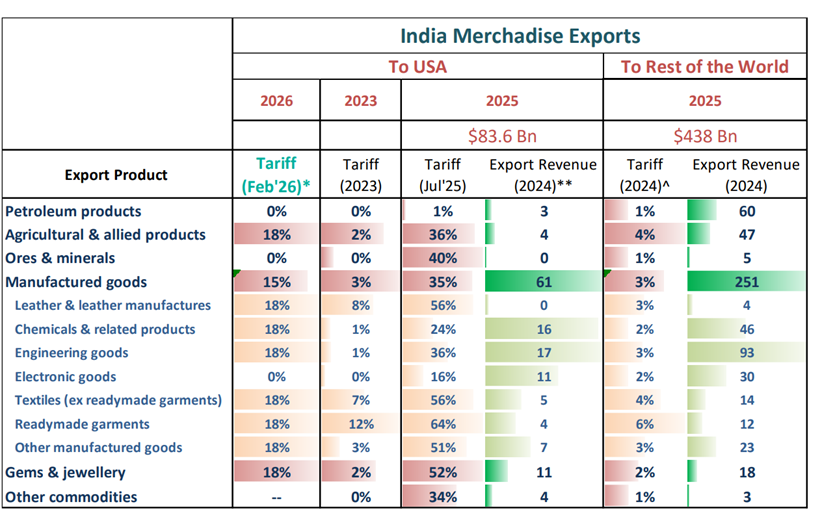
Feb’26 is a step-down from very high tariff of 2025. Peak US tariffs seen in Jul’25 (often 35% to 64%) have eased, but most key rates are still at 15% to 18%. We are still far from the “pre-Trump” rates and the question remains whether we reach there or not.

The US export basket is $83.6 bn, and manufactured goods alone are ~$61 bn, now facing a mid-teens tariff wall.

So what? Unless tariffs normalize further, we can expect margin pressure, price pass-through attempts, and export diversion away from the US, especially in labor-heavy categories (textiles, garments, leather, gems). More progress is needed on tariffs. Or, should we believe that the world trade order has permanently changed? Only time will tell.

Textiles and Apparels

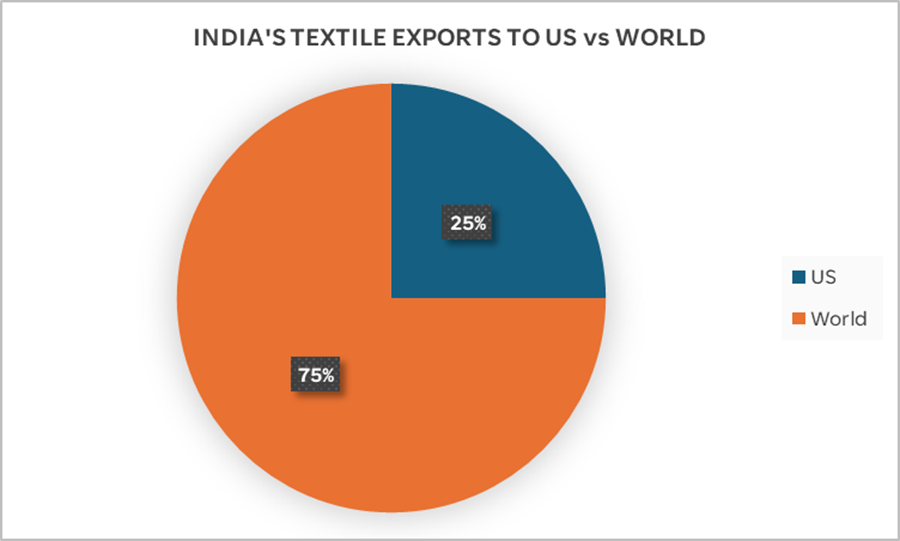
The textiles and apparel sector will face a great relief from the reduced US tariffs.

Table 2.1

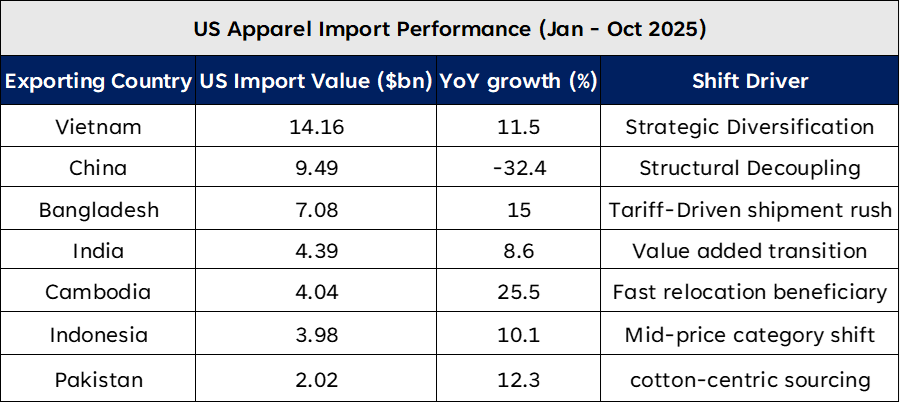
Exports, including cotton garments and home textiles, from India face stiff competition from Bangladesh, Vietnam and other low-cost manufacturing hubs.

The reduced levy of 18% on Indian garments is less than the 20 per cent imposed by the US on Bangladesh or Sri Lanka. This could lead to textile orders returning to India after months of tariffs as high as 50% pushed some production to countries like Bangladesh.

Table 2.2

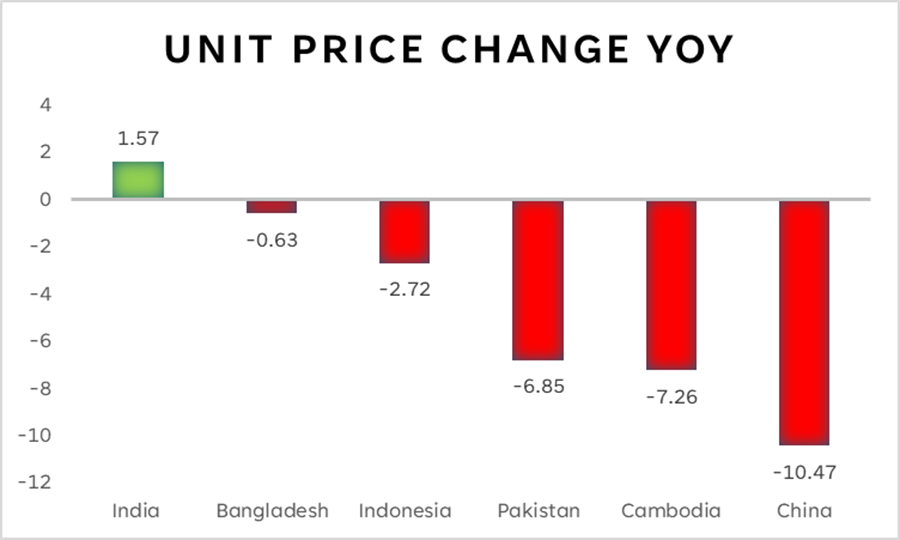
The below pricing data confirms that Bangladesh’s volume growth came at the expense of profitability. The country’s average unit prices fell 0.63%year-on-year, reflecting aggressive price concessions to secure rushed orders.

Table 2.3

Only India managed to post a price increase, suggesting comparatively stronger buyer confidence in its product mix, compliance positioning, and perceived value addition. Bangladesh, by contrast, joined the group of sourcing destinations trading margin for market share.

Gems and Jewelry

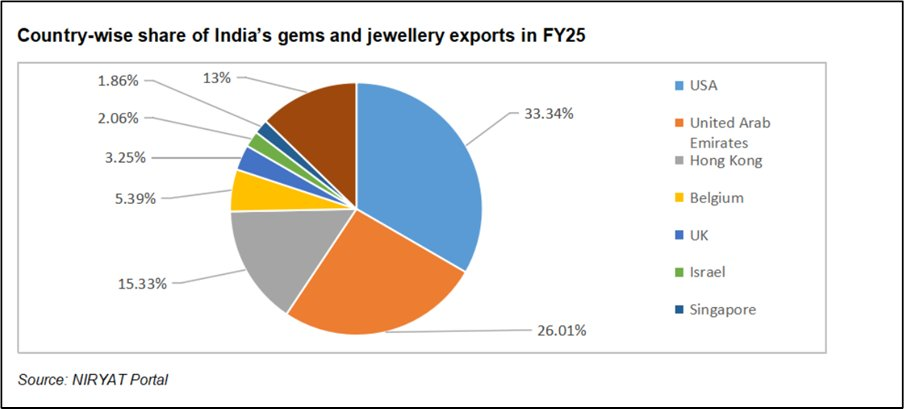
There is much to rejoice in India’s gems and jewelry sector. The US is its largest export market, accounting for about 30% of industry sales.

Table 3.1

In 2025, reciprocal U.S. tariffs disrupted trade flows to USA sharply. Duties on polished diamonds and colored gemstones surged from 0% to 10% in April, then to 50% by August.

This led to a 44.42% plunge in India’s gem and jewelry exports to the U.S. from April–December 2025 (US$ 8,691.25 million to US$ 3,862.08 million).

The tariff cut lowers costs for US importers, provides immense relief to diamond jewelry manufacturers enhancing the competitiveness of Indian diamond jewelry in the largest export market. This is poised to revive demand and stabilize operations.

Seafood

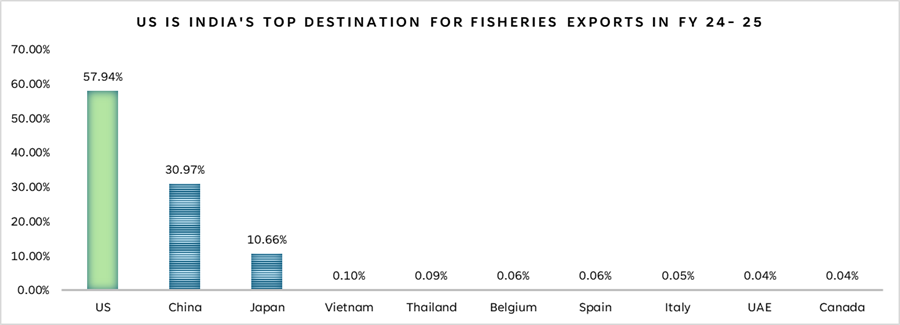
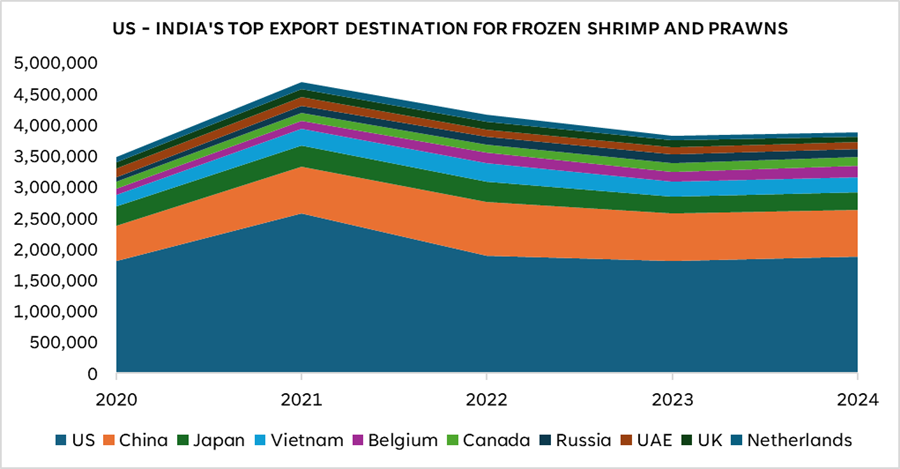
The seafood sector, especially shrimp and frozen food exporters, is highly dependent on the US market. With slashed taxes on Indian exports, seafood companies are likely to report improvement in earnings visibility and demand recovery.

Table 4.1

Table 4.2

Fish exports to the US fell 15% by volume to 201,501 tons in the April-November period of the current fiscal year, while value declined 6.3% to USD 1.72 billion from USD 1.84 billion a year earlier, SEAI General Secretary K N Raghavan said.

The decline came after the US imposed 50 per cent tariffs on Indian goods in August 2025 – the highest for any Asian country – including a 25% penalty linked to India’s purchase of Russian oil.

With the latest reduction, India is expected to compete more effectively with rival exporters such as Ecuador, Indonesia, Thailand and Vietnam.

Chemicals

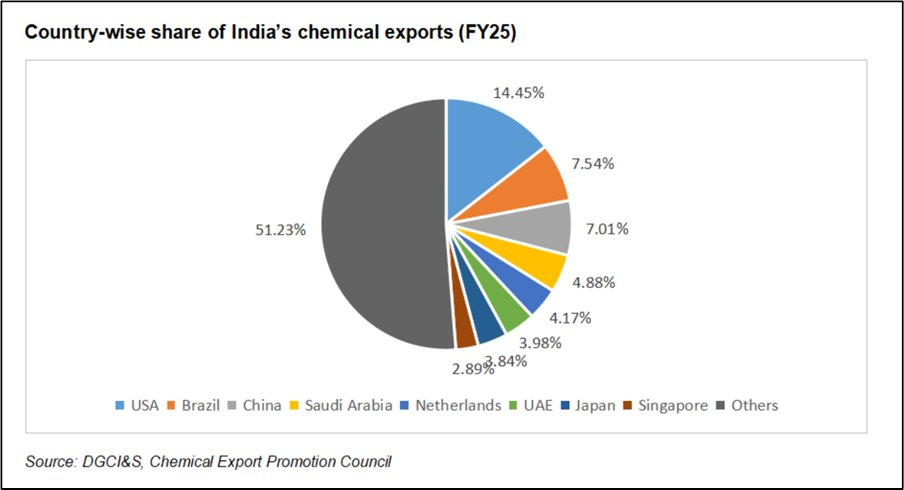
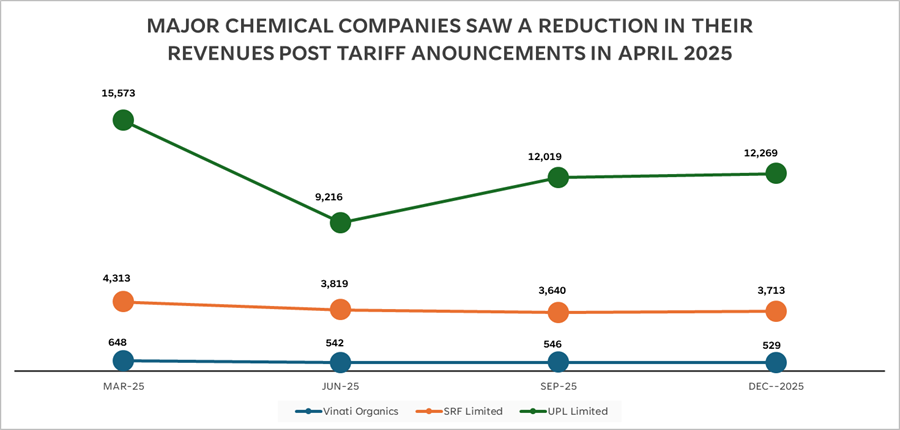
The Indian Chemical sector has been under pressure since last 2-3 years majorly due to global slowdown, Intense pricing pressure due Chinese competition, volatility in raw material prices and rising fixed costs. Besides this the sector witnessed incremental tariffs by US to ~50%.

Table 5.1

Table 5.2

We believe the recent announcement of tariff reduction is sectoral positive as the reduction in US tariffs to ~18% is likely to provide a level playing ground to India with other competitors such as China (47.5% tariff), South Korea, Japan, EU (15% tariff), Vietnam (20% tariff), Malaysia, Indonesia, Philippines (19% tariff).

But all is not good yet. Some sectors stay untouchable by tariff cuts, thanks to the powerful shield of US’ Section 232!

Section 232 of the Trade Expansion Act of 1962 is a U.S. law authorizing the President to impose tariffs or restrictions on imports if the Department of Commerce determines they threaten national security. It was created by Congress and signed into law by President John F. Kennedy.

The law’s main goal is to protect U.S. industries that are deemed essential for national security. If a product or material is important for the U.S. to maintain its defense, economy, or infrastructure, the government can act to make sure foreign competition does not harm those industries.

Who Gets Affected?

Products in industries like steel, aluminum, automobiles, timber, copper, and ships are often protected under Section 232 because they are considered vital for the country’s defense, infrastructure, and security. These sectors are seen as critical for making military equipment, building infrastructure like roads and bridges, or for other national security needs.

How It Works:

If there’s a threat to these industries from foreign imports (i.e., foreign countries are flooding the U.S. market with cheaper products that hurt local businesses), the U.S. government can impose tariffs (higher taxes) on these foreign goods to make them more expensive and less attractive to buy.

What this means for India?

  • India too has exposure to sectors who fall under the Ambit of the Section 232 tariffs. According to available data, one-tenth of India’s exports or over $8 billion worth of exports may still face higher tariffs.
  • Sectors that fall under the ambit of Section 232 include Automobiles, Steel, Aluminum, Timber, Copper and trucks & ships. They continue to remain under Section 232 due to national security reasons.
  • According to the UN COMTRADE data, autos form the biggest exposure to this Section 232 with shipments worth nearly $4 billion falling under the national security lens. Steel exports were worth $2.5 billion, while Aluminum exports were close to $800 million. These sectors contribute to nearly 85% of total Indian exports which remain at risk under Section 232.

In conclusion, while the US–India trade “deal” offers promising benefits, particularly for sectors like textiles, gems, and seafood, it comes with a level of uncertainty due to its dependence on shifting political dynamics. Unlike the more structured EU agreement, the US deal’s success is intricately tied to the political climate, with the potential for sudden changes in trade policies. If the deal holds and the tariff reductions continue, it could revitalize key sectors of the Indian economy, especially in export-driven industries. However, for the deal to truly deliver long-term value, it will require political stability and continued efforts to address the remaining tariff challenges.

****

That’s it from our side. Have a great weekend ahead!

If you have any feedback that you would like to share, simply reply to this email.

The content of this newsletter is not an offer to sell or the solicitation of an offer to buy any security in any jurisdiction. The content is distributed for informational purposes only and should not be construed as investment advice or a recommendation to sell or buy any security or other investment or undertake any investment strategy. There are no warranties, expressed or implied, as to the accuracy, completeness, or results obtained from any information outlined in this newsletter unless mentioned explicitly. The writer may have positions in and may, from time to time, make purchases or sales of the securities or other investments discussed or evaluated in this newsletter.
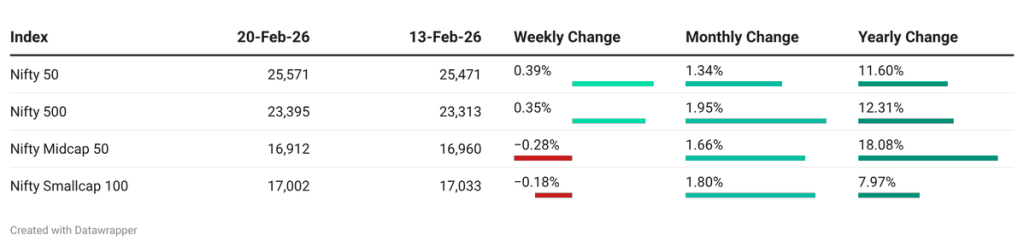
CAGR Insights – 30 Jan 2026

CAGR Insights is a weekly newsletter full of insights from around the world of the web.

What we are reading this week

  • There’s Always Room for Quality: Read here
  • Gold Price Pattern Shows Where the Market May Go Next: Read here
  • Critical minerals are ‘strategic choke-points’ in energy transition: Read here

From Red Screens to Lifetime Riches: Raj’s Untold Saga of Mastering Long-Term Investing

We hear you—loud and clear. Portfolios flashing red. Returns not exciting investors for nearly two years. The Nifty’s grind through 2024–2026, Fed rate hikes, Trump’s whims and fancies, and relatively slower corporate growth have tested everyone’s patience.

“Two years down… we came looking at phenomenal returns of Indian markets in 2023-24, when will we experience the same?”

These are the calls filling our days.

One such call came from a client who joined us in June 2024. After months of investing, his portfolio showed no meaningful returns. Anxiety had set in, and his faith in equities was wavering. Instead of offering reassurance through words alone, we showed him something more powerful—the journey of one of our long-standing clients, Raj Patel (name changed), a 48-year-old Mumbai-based investor with over 13 years in the market (even before he became our client).

We began with Raj’s early years – he was investing Rs. 1 lac per month in a portfolio of equity mutual funds since 2013. While his investments increased over time, we have assumed that he continued investing Rs. 1 lac since then.

The below chart showcases Raj’s journey of investing Rs. 1lac per month in a portfolio of four funds (Rs. 25K each). Further, we have assumed that the portfolio remains unchanged for the sake of simplicity. The four funds chosen are –

  1. HDFC Midcap Fund Regular Growth
  2. ICICI Equity and Debt Fund
  3. UTI Index Fund
  4. Franklin Flexi Cap Fund

Raj’s journey offers three very important learnings.

LEARNING 1

The first few years of investing represents a story which can look very different from reality – both on the upside and the downside.

For Raj, the first few years looked exceptional. 20% XIRR in the first year and 44% in the following year (driven by BJP led rally in 2014). The return then fell to 16% XIRR in the fourth year and let’s be honest – Raj was disappointed because by now he had gotten used to seeing >20% returns at any point in time.

This is when he came to us. And we helped him set more realistic expectations.

After seven years of consistent investing, Raj’s portfolio stabilized and began delivering a healthy XIRR of 16–18%. Just for context, this means that his money is likely to double every 5 years.

In the current scheme of things, a lot of first-time investors started investing in mutual funds after witnessing the bull market returns that their friends, relatives and colleagues made from 2021-2024. For anyone who has been investing for less than 3 years, the returns look anything but exciting.

But what is important to understand, is that the combined effect of time, compounding, and staying invested smoothens volatility.

Imagine if Raj had started his SIP in March 2018, his XIRR journey would have looked like below.

LEARNING 2

We together with Raj witnessed a completely different chapter in March 2020.

Nifty 50 fell by 35% from its last high and Raj’s portfolio XIRR dropped to just 2%. Imagine – Even after investing for 7 years, Raj witnessed a massive erosion of all his past gains.

Can this happen to you?

Absolutely. Black swan events cannot be predicted and the outcome could look very depressing even as a long-term investor. All equity investors should therefore know that while these instances will be rare and few, they can happen.

LEARNING 3

Raj did get uneasy in March 2020. But he had also seen 2008 and he somewhat understood black swan events.

Moreover, Raj did not need to redeem. His equity investments were aligned with long-term goals, and his near-term cash needs were already planned elsewhere. He was comfortable to stay put, let his SIPs run.

But what if Raj had a planned use of his investments in March – April 2020. What if his son was going into college and he had planned to use his mutual fund investments to fund the cost?

He would have had to exit at a 2% average annualized return – an extremely unexpected outcome and something nobody deserves.

Ideally, if Raj had a planned utilization of funds in 2020, he should have started shifting his corpus to safer avenues starting 2017/2018. Such a shift to a mix of Debt, Arbitrage, Hybrid funds would have ensured that he books gains at much higher returns and subsequently protects his capital.

This is something that most investors do not think enough about. Especially in the middle of a bull market, one tends to put everything in equity investments. Even funds which they know they will need in the next 2-3 years. Ignoring the possibility of a big market drawdown is a common mistake and one which we under-estimate more than we should.

The key takeaway is that markets are rewarding. But for it to be rewarding for you, it has to be coupled with patience, endurance and meticulous planning.

****

That’s it from our side. Have a great weekend ahead!

If you have any feedback that you would like to share, simply reply to this email.

The content of this newsletter is not an offer to sell or the solicitation of an offer to buy any security in any jurisdiction. The content is distributed for informational purposes only and should not be construed as investment advice or a recommendation to sell or buy any security or other investment or undertake any investment strategy. There are no warranties, expressed or implied, as to the accuracy, completeness, or results obtained from any information outlined in this newsletter unless mentioned explicitly. The writer may have positions in and may, from time to time, make purchases or sales of the securities or other investments discussed or evaluated in this newsletter.
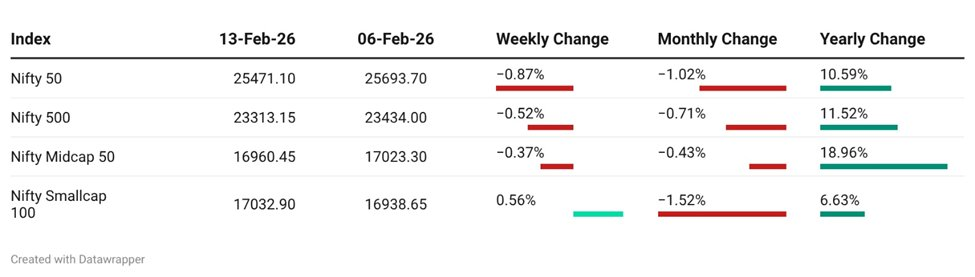
CAGR Insights – 23 Jan 2026

CAGR Insights is a weekly newsletter full of insights from around the world of the web.

What we’re reading this week

  • Here’s the secret to spending money with no regrets: Read here
  • Why your salary alone does not decide your loan terms: Read here
  • Deep Structural Reforms supporting India’s economic resilience: Read here

How GIFT City’s USD Mutual Funds Revolutionize NRI Portfolios

Priya Sharma, a savvy Mumbai-based marketing professional, has always invested with discipline—steadily building wealth through SIPs in mutual funds. With ambitions of funding her daughter’s US education and eventually settling abroad, she sensibly diversified into international funds of funds.

But her confidence is now fraying. RBI’s long-standing overseas investment cap has choked access to global funds, and each morning the weakening rupee tells a harsher story. A 12–15% return in India shrinks to single digits in dollar terms, quietly wiped out by a 4–5% annual currency depreciation.

Despite doing everything right, Priya feels shortchanged. Her savings aren’t failing—India’s currency is. And she’s left asking why disciplined investing still can’t protect her global goals.

Priya then discovers GIFT City—more than a location, a financial lifeline built for investors like her. Launched in 2015 as India’s first International Financial Services Centre (IFSC), it allows mutual fund investors to access global markets without the burden of stock picking.

With investments denominated in foreign currency, gains are insulated from rupee depreciation offering seamless global exposure. It’s a bold policy vision—designed to help investors earn global returns without their wealth being dragged down by INR volatility.

Priya leans in—this isn’t a distant promise, it’s already live. GIFT City offers foreign currency-denominated mutual funds with a simple, powerful advantage: invest in foreign currency, redeem in foreign currency.

She can put dollars to work from her Indian salary, see her NAVs compound in USD, and eventually withdraw in dollars for her life overseas— only one time conversion at the start of investing, no rupee erosion, no depreciation drags at all.

Why does this matter now?

The rupee’s decline isn’t slowing. Trade deficits, oil dependence, and shifting global capital flows continue to weigh on INR. What looks like a 10% gain in rupee terms often shrinks to just 5–6% when measured in dollars.

For investors like Priya with global goals, this gap is costly. GIFT City changes the equation.

Real-World Use Cases That Resonate

Use Case 1: Funding Foreign Education.

  1. Priya’s daughter plans a US master’s degree—about $50,000 per year in tuition. With traditional India-based investments, Priya would redeem in rupees and convert to dollars later, risking a 15–20% cost increase over four years due to rupee depreciation.
  2. GIFT City’s USD-denominated mutual funds offer a smarter route. Priya invests and redeems directly in dollars—no forex conversion loss, no TDS—keeping her education corpus aligned with actual expenses, subject to annual LRS limits.

Use Case 2: Global Diversification

  1. Diversification is the real game-changer. Priya no longer wants an India-only portfolio. Through GIFT City, she can access outbound funds investing across global markets—US, China, Europe and more—all denominated in USD.
  2. The result? Smarter risk spreading. US tech can cushion Indian market swings, and global exposure brings balance to her portfolio. With IFSCA’s single-window approvals, onboarding is simple and seamless—global diversification without the usual friction.

Use Case 3: Outbound Investing:

  1. To fund her overseas ambitions, Priya makes her strongest move yet—outbound investing through GIFT City. Via USD-denominated mutual funds and AIFs, she gains direct exposure to global leaders like Apple, Tesla, Nasdaq indices, and Chinese equities from day one.
  2. This isn’t just diversification, it’s borderless growth. Her investments are aligned with her future expenses, insulated from INR depreciation, and purpose-built for Indians with global goals.

Priya’s story reflects the reality of thousands of Indian investors today. If your goals are global, your portfolio should be too.

While this sounds exciting—and it is—it’s important to note that GIFT City investing makes the most sense beyond a certain net worth. Here’s why:

  1. LRS-based funding: Investments are routed through the Liberalised Remittance Scheme, which means additional bank-level documentation and compliance, including Form A2.
  2. Tax reporting complexity: Since these investments are USD-denominated, they require additional disclosures in your income tax returns, adding to compliance effort.
  3. DIY investor caution: For self-directed investors, it’s critical to understand the underlying global exposure of the mutual fund—geography, sectors, currency, and concentration—before investing.

In short, GIFT City is a powerful tool, but it’s best used thoughtfully, with the right scale and clarity.

PSA: Investing in a country ≠ just market risk

A lot of investors miss this: when you invest in another country, you’re not only betting on its companies, but you’re also taking on that country’s currency and macro-economic risk.

Suppose Priya invests ₹10 lakh in a US-focused mutual fund when 1 USD = ₹75. She buys $13,333 worth of US stocks.

Insights:

  • Even though the US fund gained the same 10% in all cases, INR returns vary widely depending on currency movement.
  • A weakening rupee boosts returns for Priya, while a strengthening rupee erodes them.
  • This is why investing abroad without considering currency risk can be misleading—your INR performance may look very different from your USD performance.

Priya’s journey highlights a crucial truth: disciplined investing in India alone may no longer be enough for global goals. GIFT City’s USD-denominated mutual funds offer a practical, efficient way to align investments with overseas aspirations—providing currency protection, global diversification, and seamless access to international markets. For investors seeking to secure education costs, build borderless portfolios, or hedge against INR depreciation, the opportunity is real and timely.

As a trusted mutual fund distributor, we also offer access to GIFT City products, helping our clients invest confidently in global opportunities. Reach out to us to explore how you can give your portfolio a truly international edge.

****

That’s it from our side. Have a great weekend ahead!

If you have any feedback that you would like to share, simply reply to this email.

The content of this newsletter is not an offer to sell or the solicitation of an offer to buy any security in any jurisdiction. The content is distributed for informational purposes only and should not be construed as investment advice or a recommendation to sell or buy any security or other investment or undertake any investment strategy. There are no warranties, expressed or implied, as to the accuracy, completeness, or results obtained from any information outlined in this newsletter unless mentioned explicitly. The writer may have positions in and may, from time to time, make purchases or sales of the securities or other investments discussed or evaluated in this newsletter.
CAGR Insights – 17 Jan 26

CAGR Insights is a weekly newsletter full of insights from around the world of the web.

What we’re reading this week?

  • How a Farmer’s son achieved financial stability starting from a salary of Rs. 5000: Read here
  • How the Sensex Keeps Changing Over Time: Read here
  • Why India’s struggling wool economy offers a cautionary tale for policy makers: Read here

Gold or Equity? The Smarter Way to Win Is Not Choosing Sides

We all saw a phenomenal run by gold recently while Indian equity markets are down from last 1.5 years. This would have made all of us question our asset allocation and would have tempted us to invest more in gold rather than equities. In today’s newsletter we address this confusion.

Returns

A common misstep among investors is directly comparing gold with equities to determine which asset class is outperforming at a given time. However, it’s crucial to recognize that gold and equities serve different roles in a portfolio. Rather than viewing them as competitors, they should be seen as complementary assets.

Gold often acts as a hedge during periods when equities underperform. For instance:

  • 2007–2009: Amid the global financial crisis, equities plummeted while gold prices surged.
  • 2011–2012: Equity markets faced stagnation, but gold continued its upward trajectory.
  • 2020: During the COVID-19-induced market crash, gold prices rose sharply.
  • 2024–Current: Equity markets experienced stagnation and drawdowns, whereas gold maintained its growth.

These instances highlight gold’s potential to provide stability during equity market downturns. Every time there is turmoil which threatens stability, money tends to move towards gold which is considered to be a safe store of value.

Because of the above pattern, it is commonly said that gold and equities move in opposite directions—but that’s not entirely accurate. There have been several periods when both gold and equities have delivered strong performance simultaneously.

  • 2005: In 2005, India’s equities surged 43% on 8.4% GDP growth from manufacturing/services boom and FDI, while gold rose 20% amid global liquidity, China demand, and rupee stability.
  • 2006: In 2006, India’s equities surged on sustained economic expansion, foreign investment inflows, and sector booms in real estate and IT despite mid-year volatility, while gold advanced amid ongoing Chinese commodity demand, loose global monetary conditions, and strong seasonal purchases.
  • 2009: Post the financial crisis, equities rebounded, and gold continued its ascent.
  • 2023-2024: Geo-Political uncertainty driving demand for Gold from Central Banks

Is Gold always a positive trending asset class?

No. Just like any asset class; Gold has gone through periods when it has given negative returns to investors. Gold has also gone through long periods of stagnation.

But the bigger question today is to decide whether to invest in Gold or Equity.

Before we get to the narrowing of the answer, let us look at how gold and equity stack up against each other over the long term.

We looked at the 5-year rolling returns of 24ct Gold, Nifty 50 and NSE 500 since 2000.

The results are noticeable.

  • Average 5-year rolling returns for Gold is slightly lower than that of Nifty 50 and NSE 500
  • Gold has more instances of negative return than either of the indices. So yes, Gold has gone through a greater number of 5-year periods when it has delivered negative returns
  • Both Gold and NSE 500 have given >15% return ~40% of the times
  • Gold and equity have more periods of negative correlation than positive correlation. The below table summarises how gold and equity behave in different circumstances.

Any investment decision should ideally be driven by two aspects – How much you allocate and how much you pay.

Asset Allocation in Gold

We have always believed that a 10-15% of net worth allocation to Gold is an optimum one. This is because Gold is an asset class which has a single dynamic. Unlike equity, which is a combination of thousands of businesses, there is no diversification within Gold as an asset class.

Further, Gold prices are driven solely by demand and supply and there is no underlying business cashflow that defines gold as an asset class.

On the other hand, equity prices are also a function of demand and supply but equity as an asset class benefits from ownership in businesses. Its returns come from earnings growth, dividends, and valuation expansion, which makes it a wealth-creating asset over the long term. As economies grow and companies expand, equities tend to compound wealth significantly.

So Gold is a single product asset class with a single dynamic of price driver. Anything beyond 10-15% can serve as a concentration risk.

How much you pay?

How much return we make out of an investment is determined by at what point we invest and for how long are we willing to wait.

There is no strict science to calculate the right price point to enter. The leap of faith has to depend on data and a little bit of what you feel.

For example, to decide where to put your money today, you need to think that if Gold has given 2X returns in the last 12-18 months, can it double from here in the next 3 years. If the answer is yes, you would want to invest more.

Once we understand the long-term potential of an asset class, the best time to invest is when the asset class has been lying low and not garnering the maximum interest. The second-best time is to invest when the asset class has gained momentum, and you see further room on the upside.

Conclusion

Both equity and gold are long term asset classes, and any investment should be made keeping at least 5-7 years of time frame in mind.

For those who have a low allocation to Gold, build long term allocation through SIPs and STPs. For those who have adequate allocation, avoid building long term allocation. Any tactical call should be backed by strong data backed views.

Gold and equity are not rivals—they are complements. One should use equity to grow wealth and gold to protect purchasing power and manage risk across cycles.

****
That’s it from our side. Have a great weekend ahead!

If you have any feedback that you would like to share, simply reply to this email.

The content of this newsletter is not an offer to sell or the solicitation of an offer to buy any security in any jurisdiction. The content is distributed for informational purposes only and should not be construed as investment advice or a recommendation to sell or buy any security or other investment or undertake any investment strategy. There are no warranties, expressed or implied, as to the accuracy, completeness, or results obtained from any information outlined in this newsletter unless mentioned explicitly. The writer may have positions in and may, from time to time, make purchases or sales of the securities or other investments discussed or evaluated in this newsletter.