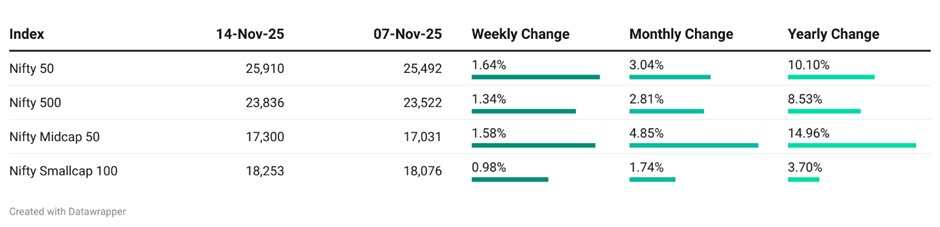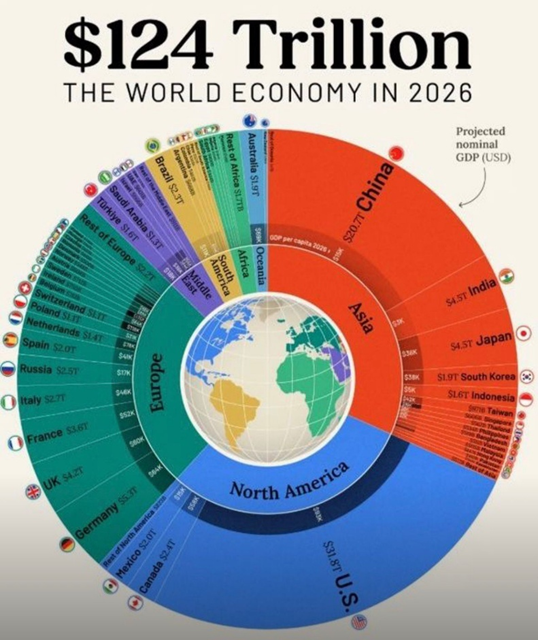
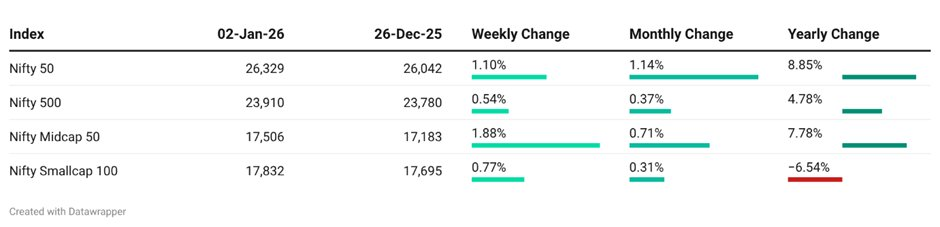
CAGR Insights – 2 Jan 2026

CAGR Insights is a weekly newsletter full of insights from around the world of the web.
Looking Beyond Mutual Funds? Here’s Why SIFs Might Make Sense

Specialised Investment Funds (SIFs) are SEBI-regulated investment options that give fund managers more flexibility than regular mutual funds. Unlike traditional mutual funds that predominantly follow a stock only approach, SIFs employ an active allocation framework and can use tools like derivatives to manage risks.

SIFs are being launched by Mutual Fund AMCs subject to regulations laid down by SEBI. Eligible AMCs are launching the SIFs under a different brand to differentiate the category. Minimum investment size for an SIF is Rs. 10 lakhs.

Why were SIFs launched?

Before SIFs were launched, mutual funds were the only investment avenue for the masses to invest in equity market. PMS entities have a minimum tranche of Rs. 50L and AIFs have a minimum tranche of Rs. 1Cr.

This rendered the masses incapable of being able to invest smaller chunks of money and at the same time get exposure to nuanced strategies which help them ride both cycles of the market.

SIFs because of their ability to use derivatives, claim to fill this gap. Using select derivative strategies, SIFs aim to benefit from both the upside and the downside of the market. They are in that sense an alternative to a certain category of Cat III AIF, more popularly known as Long – Short AIFs.

Therefore, SIFs were launched to enable mass investors access flexible strategies—like long-short positions and derivatives—while enjoying mutual fund taxation, aiming for better risk-adjusted returns across different market conditions.
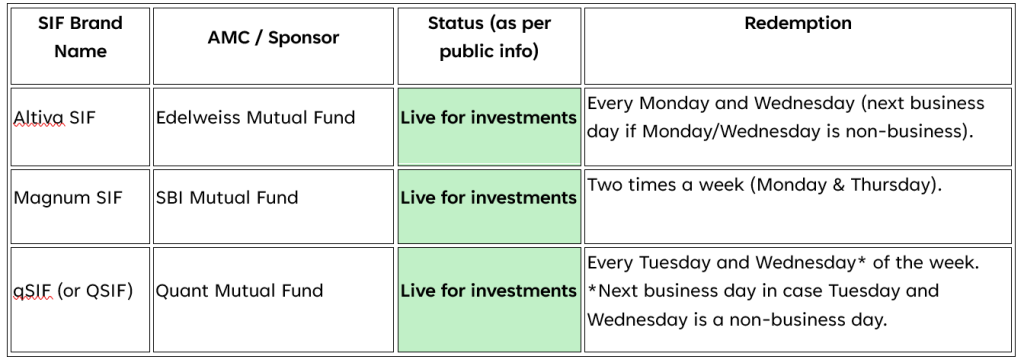
What are the different types of SIFs?
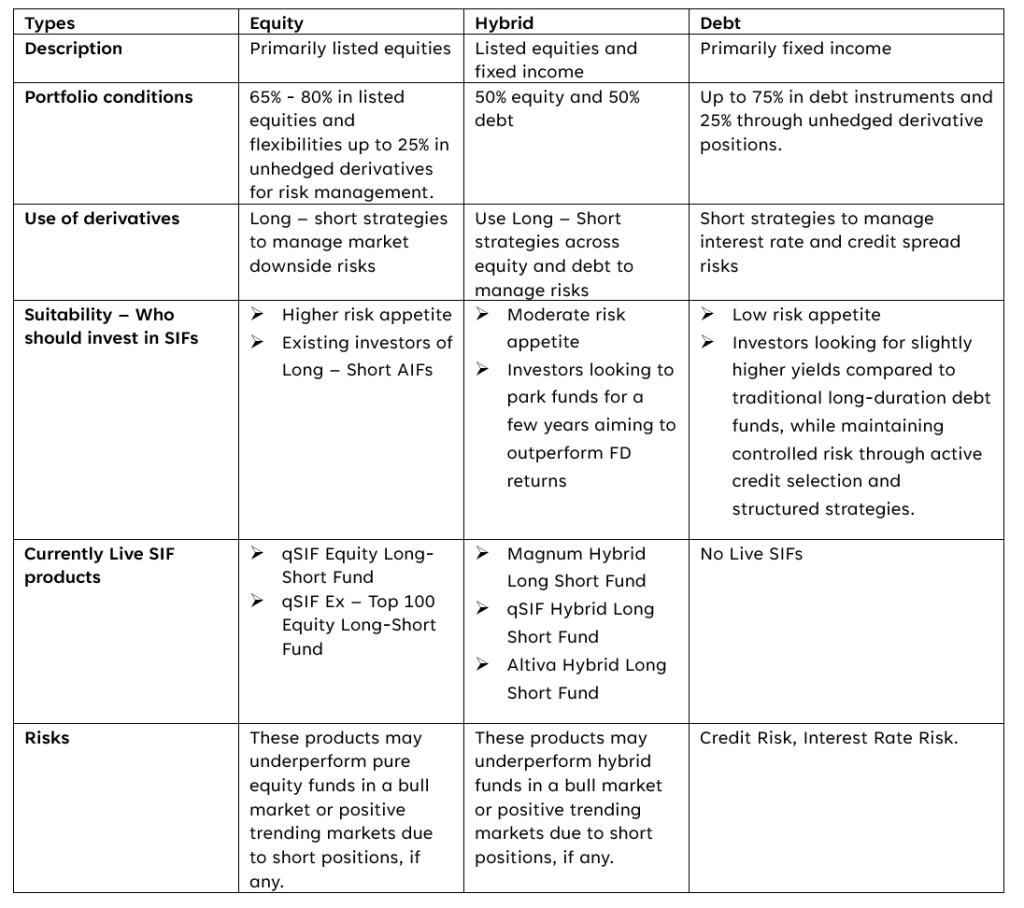
Considerations for Investing in SIF’s

  1. Minimum Investment: 10 lakhs
  2. Risk Appetite: Investors should understand that these funds use advanced strategies like long-short positions and tactical allocation, which may carry higher risks than regular mutual funds.
  3. Dependence on fund manager expertise and execution capabilities.
  4. Use of leverage, derivatives, and short positions introduces strategy-specific risks, including potential for amplified losses and increased volatility.
  5. Aim to seek portfolio diversification into less conventional asset classes and strategies.
  6. Are prepared for longer investment horizons aligned with redemption terms.

Before investing, investors should review their financial goals, risk appetite, and liquidity needs, and consider consulting a SEBI-registered financial advisor.

Ticket Size: Minimum investment is ₹10 lakh aggregate per investor across all SIF strategies in one AMC. SIPs are allowed if cumulative meets this threshold.

****
That’s it from our side. Have a great weekend ahead!

If you have any feedback that you would like to share, simply reply to this email.

The content of this newsletter is not an offer to sell or the solicitation of an offer to buy any security in any jurisdiction. The content is distributed for informational purposes only and should not be construed as investment advice or a recommendation to sell or buy any security or other investment or undertake any investment strategy. There are no warranties, expressed or implied, as to the accuracy, completeness, or results obtained from any information outlined in this newsletter unless mentioned explicitly. The writer may have positions in and may, from time to time, make purchases or sales of the securities or other investments discussed or evaluated in this newsletter.
CAGR Insights – 29 Dec 2025

CAGR Insights is a weekly newsletter full of insights from around the world of the web.

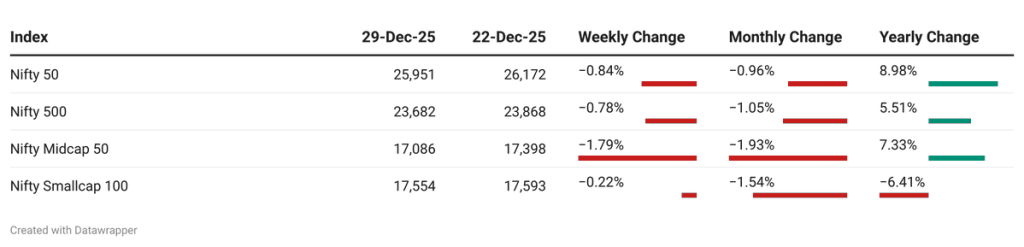
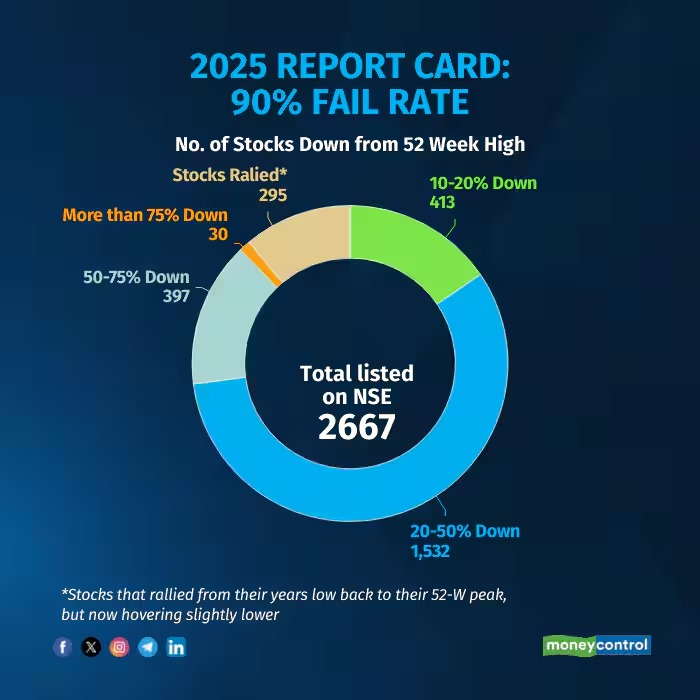
Chart Ki Baat

Gyaan Ki Baat 

NPS Withdrawal Rules: A Welcome Relief at Retirement

Retirement planning often feels rigid, but recent changes in NPS withdrawal rules have brought much-needed flexibility. Earlier, at age 60, subscribers could withdraw only 60% of their NPS corpus as a lump sum, while the remaining 40% had to be compulsorily invested in an annuity. This later evolved into an 80:20 structure, allowing up to 80% withdrawal, though the additional 20% was taxable as per the individual’s income-tax slab.

Now comes a significant relief. If your total NPS corpus at retirement is ₹8 lakh or less, you can withdraw 100% of the amount with no mandatory annuity purchase. This change is especially beneficial for individuals with a modest retirement corpus, as it improves liquidity and gives greater financial control at a crucial life stage.

Example:

Consider a retiree with an NPS balance of ₹7.5 lakh at age 60. Under the new rule, the entire amount can be withdrawn in one go. As per current tax provisions, 60% (₹4.5 lakh) remains tax-free, while the remaining ₹3 lakh is taxable based on the retiree’s applicable income-tax slab.

This update makes NPS more practical, flexible, and aligned with real retirement needs putting the power of choice back in the hands of investors.

Personal Finance

  • Beyond Fixed Deposits: Where India’s Rich Really Park Their Short-Term Cash: HNIs manage short-term money through tax-efficient mutual funds, not FDs or savings accounts. Liquid and arbitrage funds offer liquidity with better post-tax returns. As horizons increase, they shift to equity savings, hybrid, and equity funds ensuring idle cash stays productive without sacrificing access or risk control. Read here
  • Risk-Averse India: Only 1 in 10 Households Invest in Securities Despite Awareness: A SEBI led nationwide survey found only 10% of Indian households invest in securities despite 63% awareness. Participation is higher in urban areas than rural. Key barriers include low financial literacy, product complexity, and fear of losses, though 22% of aware non-investors plan to invest soon. Read here

  • GST Relief Triggers Shift to Higher Health Insurance Covers: Indian consumers are upgrading insurance, not just buying more. Post-GST removal, health cover sizes rose sharply, with higher sums insured, longer tenures, and growing adoption of unlimited plans. Demand is increasingly driven by Tier 3 cities and younger buyers, signalling smarter, long-term protection choices. Read here

Investing

  • Private Investment Still Lags Despite Reforms, Raising Growth Concerns: Despite strong government infrastructure spending and GST-led consumption growth, private investment in India remains weak. New project announcements have declined, capex intentions fell sharply for FY26, and private investment’s GDP share stays stagnant. Structural issues, cautious demand, and global uncertainty continue to restrain a sustained private capex revival. Read here

  • SGB Final Redemption: How a ₹1 Lakh Gold Bond Investment Became ₹4.82 Lakh: The RBI has set the final redemption price of SGB 2017-18 Series-XIII at ₹13,563 per unit for December 26, 2025. Issued at ₹2,816–₹2,866 per gram in 2017, the bond delivers an absolute return of about 382%, excluding interest, reflecting strong long-term gold price appreciation. Read here

  • Why Global Investors Are Betting Big on Indian Banks?: Foreign investors are pouring nearly $15 billion into Indian banks and financial firms, signalling strong global confidence. Drawn by rapid economic growth, digital infrastructure, underbanked markets and a cleaned-up banking system, global players see India as a stable, long-term opportunity, with potential reforms likely to attract even more capital. Read here

Economy & Sector

  • ​Explained: How UPI and Digital Payments Are Transforming India’s Growth Story: Digital payments have become central to India’s economy, led by UPI, cards, wallets and Aadhaar-based systems. With UPI crossing 20 billion monthly transactions and biometric authentication on the way, digital payments boost transparency, GDP contribution, and growth, positioning India as the global leader in real-time payments. Read here
  • India Defies Odds, Faces Global Headwinds: India’s 2025 economy remained resilient despite global uncertainty, achieving ~8% GDP growth with low inflation. RBI rate cuts, GST 2.0 reforms, and middle-class tax relief bolstered demand. Markets reached record highs amid volatility. Trade pacts expanded international reach, while rupee weakness, tariffs, and global challenges persisted. Read here

****
That’s it from our side. Have a great weekend ahead!

If you have any feedback that you would like to share, simply reply to this email.

The content of this newsletter is not an offer to sell or the solicitation of an offer to buy any security in any jurisdiction. The content is distributed for informational purposes only and should not be construed as investment advice or a recommendation to sell or buy any security or other investment or undertake any investment strategy. There are no warranties, expressed or implied, as to the accuracy, completeness, or results obtained from any information outlined in this newsletter unless mentioned explicitly. The writer may have positions in and may, from time to time, make purchases or sales of the securities or other investments discussed or evaluated in this newsletter.
CAGR Insights – 19 Dec 2025

CAGR Insights is a weekly newsletter full of insights from around the world of the web.

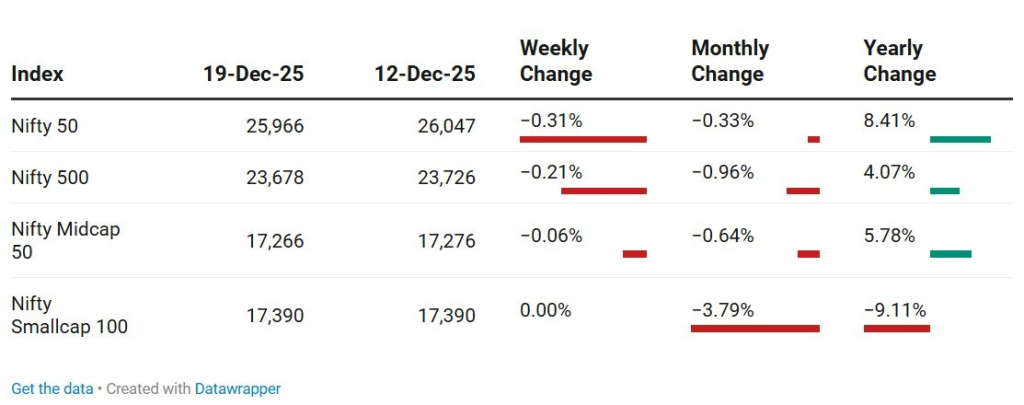
Chart Ki Baat

Gyaan Ki Baat 

Fix the Roof Before Picking Wall Colours

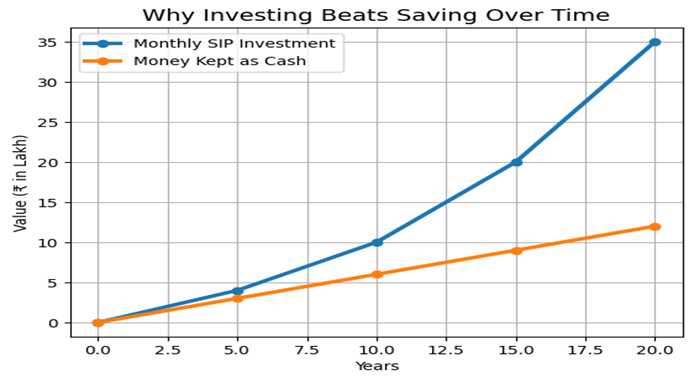
“Which mutual fund should I buy?” is often the wrong first question. Many investors rush into investing without fixing the basics—like emergency savings, insurance, or unmanaged debt. It’s like choosing wall colours while the roof is still leaking.

Investing is important but doing it without a strong financial foundation can quietly sabotage long-term wealth. Without protection and stability, even good investments can be derailed by life’s uncertainties.

The smarter approach is simple: secure your finances first, then invest with confidence.
Because wealth isn’t built by chasing products—it’s built on strong financial fundamentals.

Personal Finance

  • Want a Happier Retirement? Build These 2 Simple Habits Now: Most retirement regrets come down to two things: starting too late and saving too little. Even small amounts saved early grow powerfully through compounding, while gradual increases in savings reduce future stress. With longer lifespans and rising healthcare costs, consistency today can mean freedom, security, and peace of mind tomorrow. Read more

  • New NPS exit rules notified: PFRDA allows 80% withdrawal, 100% up to 8 lakh; PFRDA’s new NPS exit rules allow non-government subscribers to use only 20% of their corpus to buy an annuity after 15 years, retirement, or age 60. The remaining 80% can be withdrawn as lump sum or periodic payouts. Full withdrawal is allowed for amounts up to ₹8 lakh. Early exits require 80% annuity unless the corpus is ≤₹5 lakh. Subscribers can defer withdrawals or annuity purchase until age 85. Read more

  • Investing for kids: Why starting early matters more than the returns: Investing for children isn’t just about education or weddings—it’s about starting early and letting time work its magic. Small, regular investments made early benefit from compounding, ride out market volatility, and offer flexibility for changing life paths. A dedicated child-focused portfolio builds discipline, reduces stress, and protects future choices long before big goals appear. Read more

Investing

  • Is This How the AI Bubble Pops: Every bubble looks safe—until one core assumption breaks. Today, massive AI data centres are being funded via conduit debt, shifting risk away from Big Tech to investors like pension funds and insurers. If demand for compute ever slows or tech turns obsolete, these structures could crack—much like mortgage-backed securities once did—without killing AI itself. Read more

  • Should You Buy at All-Time Highs? History Has Answer All-time highs feel risky, but data says otherwise. Buying near market peaks doesn’t meaningfully hurt long-term returns—and trying to time dips rarely works. Across stocks, gold, and even Bitcoin, all-time highs are often neutral or short-term bullish. The smarter move? Stay invested, rebalance calmly, and keep buying consistently. Read more

Economy & Sector

  • Boom or Bust? What an AI Bubble Burst in the US Could Mean for Indian Markets: Rising concerns around an AI-driven valuation bubble in the US have intensified as stocks like Nvidia surge. A potential correction on Wall Street could spill over into global markets, including India. Indian equities may face short-term volatility, particularly in IT and tech-related stocks. However, relatively reasonable valuations, strong domestic demand, and sectoral diversification could help Indian markets withstand long-term damage despite temporary sentiment-driven corrections. Read more

  • The Growth of Green Finance and its Impact on India’s Sustainable Development: Green finance is becoming central to India’s growth story, bridging economic development with environmental responsibility. From green bonds and ESG funds to renewable energy financing, it is enabling India’s transition to a low-carbon economy. Backed by strong policy support and rising investor awareness, green finance is accelerating clean energy, climate resilience, sustainable cities, and biodiversity conservation—making sustainability not just an ideal, but an economic necessity for India’s future. Read more

****
That’s it from our side. Have a great weekend ahead!

If you have any feedback that you would like to share, simply reply to this email.The content of this newsletter is not an offer to sell or the solicitation of an offer to buy any security in any jurisdiction. The content is distributed for informational purposes only and should not be construed as investment advice or a recommendation to sell or buy any security or other investment or undertake any investment strategy. There are no warranties, expressed or implied, as to the accuracy, completeness, or results obtained from any information outlined in this newsletter unless mentioned explicitly. The writer may have positions in and may, from time to time, make purchases or sales of the securities or other investments discussed or evaluated in this newsletter.
CAGR Insights – 17 Nov 2025

CAGR Insights is a weekly newsletter full of insights from around the world of the web.

Chart Ki Baat

Gyaan Ki Baat 

When Even the Rules Bow Out

In investing, we’re often guided by time-tested principles: maintain a balance in asset classes, diversify, and lean away from impulse. Yet, there are rare occasions when these “rules” must be questioned. A 66-year-old investor, comfortably supported by pension and rental income (even funding two holidays a year), raised a bold question: why hold any debt if income covers all expenses? His entire portfolio is in equity mutual funds and direct equity.

This raises a profound truth: financial rules are not commandments—they are guides. The measure of a rule’s validity is its alignment with your personal context. If your income flows are stable and predictable, and your lifestyle isn’t threatened by equity’s swings, perhaps you can bend the rule of maintaining a debt cushion.

But this is precisely why such decisions demand introspection, not defiance. When you step into uncharted territory, clarity becomes your best friend. Ask yourself: Are your future costs covered? How will volatility affect your peace of mind? Do you have a fallback buffer if equity markets falter? When rules don’t apply, discipline must step in.

In essence: A rule is only as good as the wisdom behind bending it. If your financial fundamentals are strong, and purpose and prudence lead the way, then breaking a rule isn’t foolish—it’s strategic. But never break them out of arrogance—only with clarity and intent.

Personal Finance

  • I built a house on inherited land; how will I be taxed if I sell it now? He inherited a 2016-purchased plot, built a home, and now lives there. As he considers selling, he wonders how capital gains will apply—and the answer isn’t as simple as it seems. Read here

  • Rs 3,000 SIP Vs Rs 3 Lakh Lump Sum: Which One Is Better? It is important to assess your financial objectives, current circumstances and risk appetite before selecting investment instruments. Read here

  • Why serious illnesses demand more than a standard health policy? Regular health insurance pays hospital bills but can’t replace income during a major illness. Critical illness cover offers a crucial lump sum—a safety nets most people recognise only when it’s almost too late. Read here

Investing

  • The Ideal Level of Wealth: The idea of an “ideal level of wealth” is questioned, revealing surprising numbers behind the cost of a good life—and insights that might change how you think about money forever. Read here
  • Understanding the Link Between Market Growth and Money Supply: Markets look high but are liquidity-driven, and a slowdown could cool the momentum. Big crashes seem unlikely—unless a shock hits. But one key ratio could change everything— to know why. Read here

Economy & Sector

  • India’s $10 trillion destiny will be decided by 4 Ds: India is poised for a historic economic leap, projected to become the world’s third-largest economy by 2040. This ascent will be driven by four key forces: Development, Diversification, Digitalisation, and Decarbonisation, shaping a resilient and future-ready nation. These pillars will guide India’s transformation towards becoming a developed economy. Read here
  • Four charts that show how Bihar fared on major economic indicators: The vote counting for the Bihar Assembly elections points towards a significant lead for the National Democratic Alliance (NDA). Here’s a quick look at how the state has fared on key economic indicators. Read here

****
That’s it from our side. Have a great weekend ahead!

If you have any feedback that you would like to share, simply reply to this email.

The content of this newsletter is not an offer to sell or the solicitation of an offer to buy any security in any jurisdiction. The content is distributed for informational purposes only and should not be construed as investment advice or a recommendation to sell or buy any security or other investment or undertake any investment strategy. There are no warranties, expressed or implied, as to the accuracy, completeness, or results obtained from any information outlined in this newsletter unless mentioned explicitly. The writer may have positions in and may, from time to time, make purchases or sales of the securities or other investments discussed or evaluated in this newsletter.