CAGR Insights – 22 Aug 25

CAGR Insights is a weekly newsletter full of insights from around the world of the web.
Image

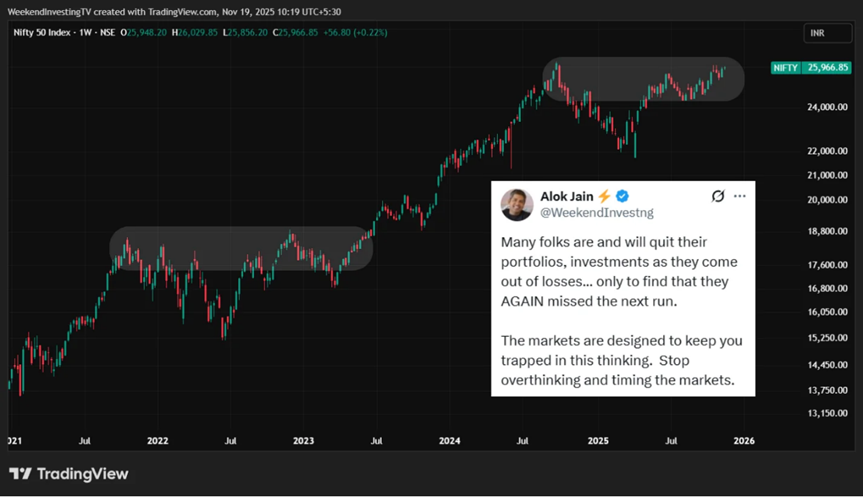
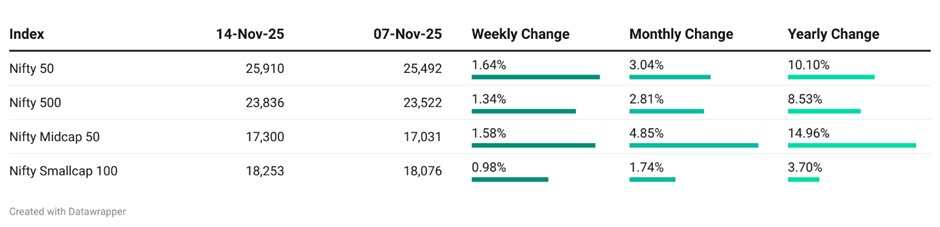
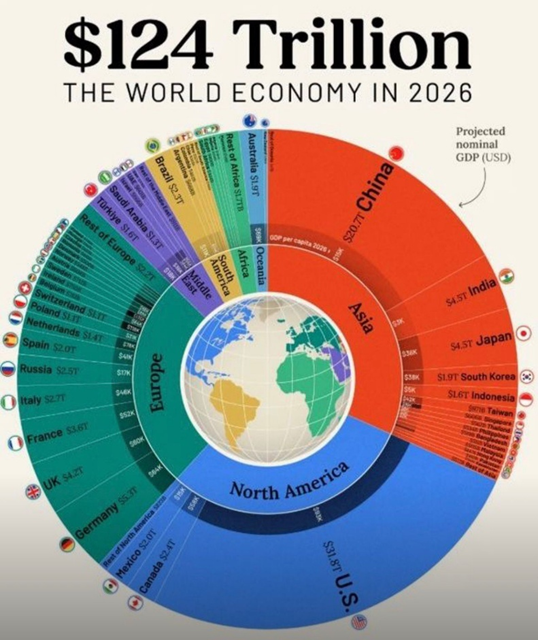
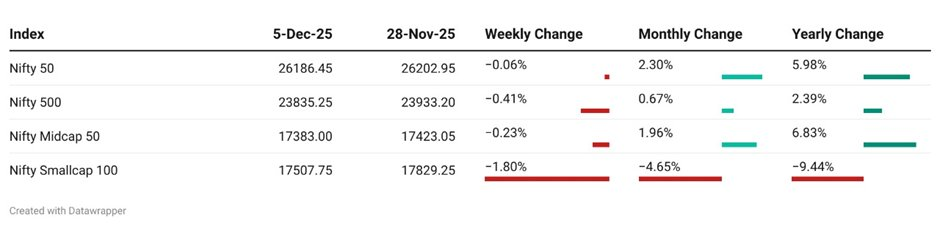
Chart Ki Baat

Image

Source: Mike Zaccardi on X

Gyaan Ki Baat 

The Power of Missing Out

In investing, we’re often told to “never miss an opportunity.” Yet Warren Buffett himself admits that his biggest mistakes weren’t bad investments, but the ones he didn’t make—opportunities he let pass, sometimes worth billions. At first glance, this might sound alarming. But it’s deeply reassuring.

Why? Because it shows us that even the world’s greatest investor doesn’t (and can’t) catch every wave. Buffett and Charlie Munger famously ignored technology stocks for decades, passing on Google and waiting until Apple became less “tech” and more a consumer brand. Many see this as a failure. In truth, it was wisdom. For every Apple or Google, there were dozens of “next big things” that ended in disaster—Pets.com, WeWork, or Quibi. By staying within their circle of competence, Buffett and Munger avoided the far more costly mistakes of commission.

This is where the real lesson lies. Missing opportunities may sting in the short term but chasing investments you don’t understand can destroy wealth permanently. As Munger put it, “I try to avoid being stupid rather than trying to be very intelligent.”

For everyday investors, this is liberating. You don’t need to invest in every hot trend. You don’t need perfect foresight. What you need is discipline, patience, and the humility to say no when something lies outside your understanding.

Remember: the road to long-term wealth isn’t paved by catching every opportunity—it’s built by avoiding costly mistakes and staying within your circle of competence. That’s the real power of missing out.

Personal Finance

  • How to fix errors in your credit report and improve your credit score? Here are 6 key ways: Fixing errors in your credit report is essential for improving your credit score, ensuring accurate financial records, enhancing loan approval chances, and unlocking better credit opportunities with simple corrective steps. Read here

  • How wealthy investors use ETFs to skirt capital gains taxes. The strategy is ‘like magic,’ advisor says: Wealthy investors avoid capital gains taxes by using a 351 conversion to transfer profitable assets to an exchange-traded fund. The strategy seeds ETFs before launch, and the original investor defers capital gains until selling their shares. Read here

  • ‘How a car in India keeps you broke’: Middle class mistaking liabilities for assets: As economic pressures tighten, Sujith’s financial cautioning is striking a chord with a middle class caught between past optimism and present strain. Read here

Investing

  • Optimizing Ourselves to Death: Optimization culture has gone from helpful to harmful—turning health, time, and productivity into obsessions. But what if chasing perfection is ruining life itself? Read here
  • Why Every Bear Market Creates the Next Big Bull Run: History shows bear markets are short and painful, but bull runs last longer and deliver outsized gains. With current consolidation in India, patience matters—today’s declines could be the foundation for tomorrow’s powerful rally. Read here
  • Changing Indices and Your Investments: Ever wondered why big companies that once ruled the markets are nowhere to be seen today? From Hindustan Motors to Satyam, history shows indices keep evolving—dropping the weak, adding the strong. That’s why investing in indices is like riding with tomorrow’s winners. Read here

Economy & Sector

  • India’s private sector posts record growth in August: HSBC flash survey: The HSBC flash India Composite Output Index, which tracks month-to-month changes in combined output across manufacturing and services, jumped to 65.2 in August from 61.1 in July. Read here
  • U.S. tariff impact: India sees Asia’s biggest earnings downgrades: Earnings growth for Indian companies has been in single-digit percentages for five consecutive quarters, below the 15%–25% growth seen between 2020–21 and 2023–24. Read here
  • Centre removes cotton import duty till Sept 30 to aid textile sector: The Centre has waived the 11 per cent duty on cotton imports till September 30, providing relief to the textile industry facing higher US tariffs and intense global competition. Read here

****
That’s it from our side. Have a great weekend ahead!

If you have any feedback that you would like to share, simply reply to this email.

The content of this newsletter is not an offer to sell or the solicitation of an offer to buy any security in any jurisdiction. The content is distributed for informational purposes only and should not be construed as investment advice or a recommendation to sell or buy any security or other investment or undertake any investment strategy. There are no warranties, expressed or implied, as to the accuracy, completeness, or results obtained from any information outlined in this newsletter unless mentioned explicitly. The writer may have positions in and may, from time to time, make purchases or sales of the securities or other investments discussed or evaluated in this newsletter.

CAGR Insights – 14 Aug 2025

CAGR Insights is a weekly newsletter full of insights from around the world of the web.

Image

Chart Ki Baat

Image

Gyaan Ki Baat 

Why “Too Safe” Can Be Risky in Retirement

When it comes to retirement money, many people think the safest strategy is to avoid all market risks. “No stocks, only fixed income!” sounds comforting — but being too safe can quietly eat away at your wealth.

Here’s the catch: inflation is the silent thief. Even at 6% inflation, what costs ₹75,000 today will cost more than double in 12 years and nearly ₹2.5 lakh in 25 years. If your money isn’t growing faster than inflation, you’re losing purchasing power every single year.

Take Mr. Patil’s example. With ₹2 crore in retirement savings and only debt investments, his money would last about 23 years. That means at 83–84, he could run out of funds — and that’s without any major medical surprises.

But add some equity to the mix, and the picture changes:

  • 33% Equity + 67% Debt → Lasts ~30 years
  • 50% Equity + 50% Debt → Lasts ~35 years

Equity brings growth, debt brings stability — together they create a portfolio that works with you, not against you. Even in market downturns, debt can cover living expenses so you’re not forced to sell equity at a loss.

The truth is, retirement isn’t the end of investing. It’s a new phase where your goal is to preserve wealth and outpace inflation. Avoiding equity entirely might feel safe, but it could be the biggest risk you take. The smart path? Balance — enough equity to grow, enough debt to sleep peacefully.

Personal Finance

  • Your 60s financial checklist: How to simplify money management before retirement: Hitting your 60s? It’s time to merge accounts, drop idle cards, move to safer investments, automate bills, and update your will—smart moves that protect wealth and peace of mind. Click to see how to make retirement truly stress-free. Read here

  • Overseas education: How remittances, loans and student earnings are taxed: Studying abroad? Beyond tuition and airfare, taxes in India and overseas can impact your budget. From TCS on remittances to local income tax on part-time jobs, smart planning can save you big. Click to avoid costly surprises. Read here

  • Are These 3 Money Myths Sabotaging Your Finances? Think budgeting is a must, renting is wasteful, or wants and needs are easy to separate? These “rules” could harm your finances. Click to uncover the truth of about 3 money myths—and how ditching them might improve your life. Read here

Investing

  • The Power of the ‘Bhav Bhagwan Che’ Principle in Stock Investing: In markets, “Bhav Bhagwan Chhe” means price tells the truth before news breaks. Paradip Phosphates proved it—big gains came before stellar results. Click to see how the BBC principle can help you spot trends early and avoid costly mistakes. Read here
  • The First $10,000 is the Most Important: The first $10,000 you save changes everything—more than $100k or even $1M later. It’s the leap from constant worry to stability, confidence, and freedom. Click to discover why escaping “Level 1” is the most life-changing money move you can make. Read here
  • How will asset tokenization transform the future of finance? Forget volatile crypto—asset tokenization could quietly transform global finance. By digitizing and fractionalizing real-world assets, it promises cheaper, faster, more transparent markets and unprecedented access for everyday investors. Click to explore how blockchain might reshape investing for billions worldwide. Read here

Economy & Sector

  • Will Trump’s India tariffs shut down world’s biggest cut diamond supplier? Trump’s 50% tariffs on Indian diamonds are pushing Surat’s famed cutters to the brink, threatening 200,000 jobs. With lab-grown gems rising and exports plunging, the “Diamond City” faces its darkest hour. Click to see why this glittering industry may lose its shine. Read here
  • Who will be hit hardest by Trump’s 50% tariff on India? A sector-wise breakdown: President Trump’s doubled tariffs on Indian goods, now at 50%, are poised to severely impact key sectors. Auto parts, jewellery, textiles, and seafood industries face significant export losses, prompting businesses to explore alternatives in Dubai and Mexico. While pharmaceuticals are currently spared, broader economic consequences loom, including potential job losses, reduced investment, and a weaker rupee. Read here

****
That’s it from our side. Have a great weekend ahead!

If you have any feedback that you would like to share, simply reply to this email.

The content of this newsletter is not an offer to sell or the solicitation of an offer to buy any security in any jurisdiction. The content is distributed for informational purposes only and should not be construed as investment advice or a recommendation to sell or buy any security or other investment or undertake any investment strategy. There are no warranties, expressed or implied, as to the accuracy, completeness, or results obtained from any information outlined in this newsletter unless mentioned explicitly. The writer may have positions in and may, from time to time, make purchases or sales of the securities or other investments discussed or evaluated in this newsletter.
CAGR Insights – 08 Aug 2025

CAGR Insights is a weekly newsletter full of insights from around the world of the web.

Image

Chart Ki Baat

Image

Gyaan Ki Baat 

The One Conversation You Can’t Afford to Delay

Growing up, money was a taboo topic in most Indian households—especially between parents and children. But today, the silence is costing families more than they realise.

A recent report shows that nearly 70% of India’s elderly are financially dependent—either on their children or by working well beyond retirement age. And with inflation eating into savings and healthcare costs on the rise, the emotional and financial burden on the next generation is only getting heavier.

That’s why it’s crucial to have the “money talk” with your parents now—not during a crisis.

This isn’t about control; it’s about care. Start small. Ask them if they feel confident managing their expenses in the years ahead. Discuss their health coverage. Understand if their retirement income can sustain them. These conversations can reveal silent stress—and help you plan together for a more secure future.

If your parents are still 5–10 years away from retirement, help them balance equity and debt wisely based on their goals and risk appetite. If they’re already retired, explore options like Senior Citizen Savings Schemes, debt funds, or annuities that can offer regular, safe income.

Remember, the greatest gift you can give your parents isn’t money—it’s peace of mind. And that starts with one open, honest conversation.

Let’s not wait for hospital bills to bring us together. Let’s plan while there’s still time.

Personal Finance

  • Income Tax: What happens if you don’t file ITR for multiple years? Legal and financial consequences explained: Not filing income tax returns for multiple years leads to heavy penalties, interest, prosecution risk, and loss of financial benefits, making timely income tax filing essential for long-term compliance. Read here

  • Wealth management in times of layoffs – 7 money tips to keep you money stress free: Layoffs are hitting harder and faster than ever—are you financially prepared? From emergency funds to smart investing, here are 7 money moves you must make to stay secure when uncertainty strikes. Read here

  • Are you very frugal when it comes to spending? These signs could mean you’re over-saving but under-living your life: Chrometophobia is an extreme case of fear, anxiety and panic at the thought of spending money. A small fraction of people suffers from this irrational affliction. It’s not a very well-understood or diagnosed condition, but in some milder formats, it does exist around us. Some of us are able, but not willing to spend. Read here

Investing

  • It’s the Housing, Stupid: Meme stocks are booming, cash is piling into money markets, and millionaires are renting—what’s going on? It’s not a market frenzy—it’s a housing crisis. High prices and rates have broken the system. Curious how? Read here
  • How Market Cap Categories Have Evolved in India: India’s stock market has evolved massively in 20 years—today’s small caps are bigger than yesterday’s large caps! Learn how market cap definitions have shifted, what it means for investors, and why categorization may limit opportunity. Read here
  • The Psychology and The Math Behind Deep Drawdowns: A small loss is a scratch; a big one can bury your portfolio. The deeper the fall, the harder the climb. Know when to cut your losses—because recovery isn’t just math, it’s mindset too. Read here

Economy & Sector

  • From seafood to auto: How will Trump’s 50% tariff impact different sectors: Trump’s 50% tariff hike on Indian exports threatens jobs and cripples’ key sectors like seafood, textiles, and gems. With losses mounting and firms eyeing relocation, all eyes are on urgent India-US talks. What’s next? Read here
  • India’s services sector rises to 11-month high in July: India’s services sector just hit an 11-month high, driven by booming global demand—despite a hiring slowdown and rising inflation. Finance is thriving, real estate is lagging, and RBI’s next move hangs in the balance. Curious why? Read here

****
That’s it from our side. Have a great weekend ahead!

If you have any feedback that you would like to share, simply reply to this email.

The content of this newsletter is not an offer to sell or the solicitation of an offer to buy any security in any jurisdiction. The content is distributed for informational purposes only and should not be construed as investment advice or a recommendation to sell or buy any security or other investment or undertake any investment strategy. There are no warranties, expressed or implied, as to the accuracy, completeness, or results obtained from any information outlined in this newsletter unless mentioned explicitly. The writer may have positions in and may, from time to time, make purchases or sales of the securities or other investments discussed or evaluated in this newsletter.

CAGR Insights – 1 Aug 25

CAGR Insights is a weekly newsletter full of insights from around the world of the web.

Image

Chart Ki Baat

Image

Gyaan Ki Baat 

The Price You Pay vs. The Value You Get

In most areas of life, we love bargains. We hunt for discounts, compare prices, and take pride in getting more for less. But in investing, this instinct often flips. When prices fall, we panic. When prices rise, we rush in—fearing we’ll miss out.

This psychology is more than just curious—it’s costly. True wealth in the markets is built by doing what feels uncomfortable: buying when others are fearful, holding steady when noise gets loud, and focusing not just on price, but on value.

What does that mean? As Warren Buffett famously said, “Price is what you pay. Value is what you get.” A stock with a low-price tag isn’t always a good deal. And an expensive-looking stock might be worth every rupee. The real question is: Are you paying a fair price for the quality of the business you’re buying?

In today’s market, with headlines buzzing and past performance chasing driving decisions, this principle matters more than ever. It’s easy to confuse data with insight, or popularity with potential. But investors who tune out the noise and focus on the basics—understanding the business, evaluating its earnings, and assessing its true worth—are the ones who win over time.

The market can stay irrational longer than you think. But if you stay rational and grounded in value, you give yourself a long-term edge.

Personal Finance

  • India one of the most affordable places to retire: HSBC report reveals how much you need: Affluent Indians now need ₹3.5 crore to retire comfortably—less than a third of what’s needed in the U.S. ($1.57M). Driven by inflation and macro risks, they’re shifting from equities to gold, alternatives, and expert-led, diversified investment strategies. Read here

  • Have money abroad? IT dept’s new guide spells out what & how to report: CBDT’s latest guide explains how resident Indians must disclose foreign income and assets in ITR this year, missed details can lead to penalties under the Black Money Act.Read here

  • Investing in volatile markets: SIP STP or Lumpsum investment, which strategy wins? Explained: Navigating volatile markets is often difficult for investors. No one knows which side the markets could move and when. Volatile markets could rise for a week but then suddenly fall and wipe off the gains of the whole week. So, how does one invest during such times? Read here

Investing

  • Debt funds vs arbitrage funds: How to pick the right one for short-term goals: Debt funds suit low-risk investors needing stable returns and liquidity for a few weeks to years. Arbitrage funds offer tax efficiency for high-income investors with a 6+ month horizon. A mix of both balances returns, liquidity, and tax benefits. Read here
  • Will interest rates continue dropping this year? Interest rates have declined since the Fed’s rate cuts last year. So, will they keep going down? Read here

  • Are We Heading Towards Another Bubble Burst? Semiconductors now dominate the S&P 500—just like tech did before the dot-com crash. Insiders are selling, risks are rising. Is another bubble brewing? Read here
  • The Best Leading Indicator of Wealth: Want to predict future wealth? Don’t ask about IQ or college—ask about income. It’s the clearest sign of where you’re headed. Want to grow yours? Read here

Economy & Sector

  • What Trump’s 25% tariff could mean for India’s GDP: Trump’s 25% tariff on Indian imports may hit GDP, exports, and US-India ties hard. Pharma at risk. Experts warn of blackmail—but is a full-blown trade war looming? Read here
  • India refuses to play ‘dead economy’. Will Trump back off? In response to U.S. tariffs and disparaging remarks, India has asserted its stance on trade negotiations. Commerce Minister Piyush Goyal emphasized India’s commitment to protecting its stakeholders and refusing deals under pressure.Read here
  • 25% tariff bomb: India’s electronics, pharma, textiles to be worst hit: US President Donald Trump has announced a 25 per cent tariff and secondary sanctions on Indian goods starting August 1. Key export sectors like electronics, pharmaceuticals, and textiles are expected to face significant headwinds. Read here

****
That’s it from our side. Have a great weekend ahead!

If you have any feedback that you would like to share, simply reply to this email.

The content of this newsletter is not an offer to sell or the solicitation of an offer to buy any security in any jurisdiction. The content is distributed for informational purposes only and should not be construed as investment advice or a recommendation to sell or buy any security or other investment or undertake any investment strategy. There are no warranties, expressed or implied, as to the accuracy, completeness, or results obtained from any information outlined in this newsletter unless mentioned explicitly. The writer may have positions in and may, from time to time, make purchases or sales of the securities or other investments discussed or evaluated in this newsletter.