CAGR Insights – 3 Oct 25

CAGR Insights is a weekly newsletter full of insights from around the world of the web.
Image

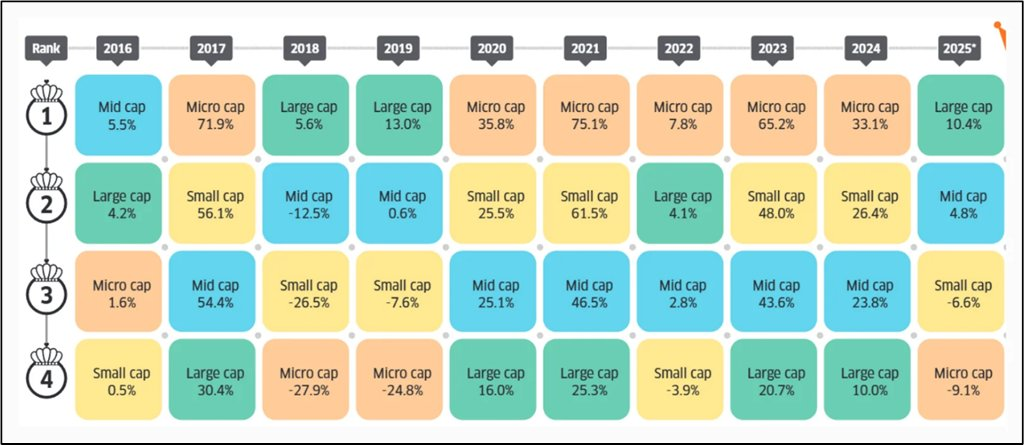
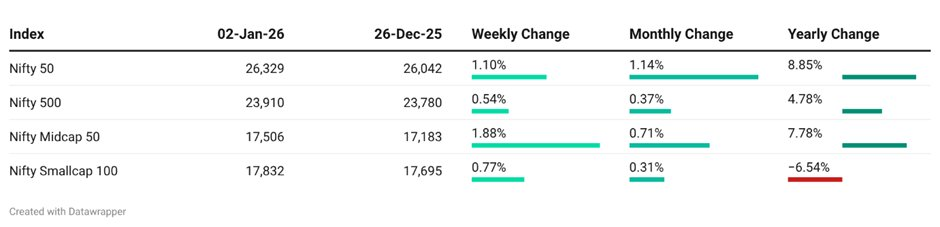
Chart Ki Baat

Image

Gyaan Ki Baat 

From Good to Extraordinary: The Power of Margin Expansion

As investors, we often chase growth—top-line numbers, market share, or flashy sector stories. But true wealth creation frequently lies in something subtler: margin expansion. At first glance, it seems obvious companies that earn more from the same sales should deliver better returns. Yet this simple idea can transform a good business into an extraordinary wealth compounding machine.

Margin expansion is more than just numbers; it reflects competitive advantage. It often signals that a company has strengthened its position—through better products, scale-driven pricing power, or operational efficiency. When these advantages are sustainable, compounding accelerates. Ordinary growth stories suddenly become unstoppable forces for wealth creation.

The challenge for investors lies in timing and discernment. Margin gains from temporary cycles—commodity price swings or short-term cost savings—can be misleading. The real prize is structural expansion, where higher margins are a result of deliberate strategy and improved capital efficiency.

Spotting these opportunities requires both analysis and intuition. Numbers alone won’t reveal the turning point; you must read between the lines, understand the business, and anticipate change before the market fully prices it in.

In a market like India, growth is abundant. The differentiator is quality of growth. Margin expansion is its fuel—a rare lever that can turn good investments into extraordinary ones. For patient investors willing to look closely, the rewards can be transformative.

In short: growth gets you started, but margin expansion drives compounding—and compounding drives wealth.

Personal Finance

  • How would Sebi’s validated UPI handles make digital payments safer for investors? Validated handles are introduced as an additional payment option for investors. This compliments existing payment modes, allowing investors the flexibility to continue using the method they are most comfortable with. Read here

  • NPS gets major overhaul: 100% equity option, shorter lock-ins, more choice: NPS upgrades from October 1, 2025, offer 100% equity, multiple schemes, and a 15-year vesting period. Discover how these changes give younger investors growth, flexibility, and smarter retirement options. Read here

  • How Festive Spending Habits Are Reshaping Investment Decisions in Indian Households: While festivals will always be about tradition and celebration, channelling a part of that festive budget into investments can help fast-track critical goals, such as your children’s education or retirement. Read here

Investing

  • Top 5 mistakes investors make in volatile markets: Common investing mistakes—panic selling, market timing, ignoring diversification, halting SIPs, and losing sight of goals—can cost you big. Discover how simple strategies can protect and grow your wealth over time. Read here

  • Rate Cuts Near All-Time Highs: Impact on Stocks and Gold: When rate cuts occur near all-time highs, history shows double-digit gains in S&P 500 and gold, with gold potentially rising 30%. Emerging markets often lag, making balanced portfolios with gold and equities crucial for protection and growth. Read here

  • The Millionaire’s Dilemma: Becoming a millionaire isn’t just about money—it’s about freedom. Hitting $1M gives options, choices, and control over your life. How will you use your wealth to shape your future? Read here

Economy & Sector

  • ​India’s Economy Steered by Robust Consumption, Investments, Low Inflation, Favourable Food Prices & GST Reforms: Strong policy support, structural reforms, and a vibrant services sector are further reinforcing the growth outlook. These projections highlight broad confidence in India’s ability to sustain high growth amidst global challenges. Read here

  • US government shutdown: What it means and how it will impact India’s economy and markets: The U.S. government shutdown affects 1.6 million federal workers, slows services, and creates market volatility. India faces potential IT delays and export impacts, highlighting the need for diversified portfolios and global awareness. Read here

  • How Did India Maintain Economic Momentum In April–September Amid Tariff Stress? India’s economy shows strong H1 FY26 growth, driven by consumption, investment, public spending, and structural reforms. RBI keeps repo at 5.5%, GDP projected at 6.8%, with robust domestic demand and global confidence. Read here

****
That’s it from our side. Have a great weekend ahead!

If you have any feedback that you would like to share, simply reply to this email.

The content of this newsletter is not an offer to sell or the solicitation of an offer to buy any security in any jurisdiction. The content is distributed for informational purposes only and should not be construed as investment advice or a recommendation to sell or buy any security or other investment or undertake any investment strategy. There are no warranties, expressed or implied, as to the accuracy, completeness, or results obtained from any information outlined in this newsletter unless mentioned explicitly. The writer may have positions in and may, from time to time, make purchases or sales of the securities or other investments discussed or evaluated in this newsletter.
CAGR Insights – 26 Sep 25

CAGR Insights is a weekly newsletter full of insights from around the world of the web.

Image

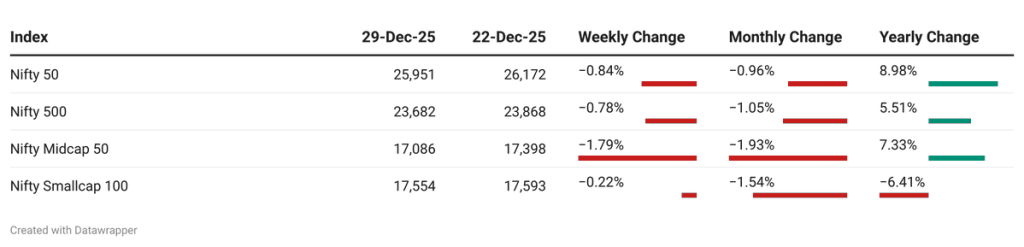
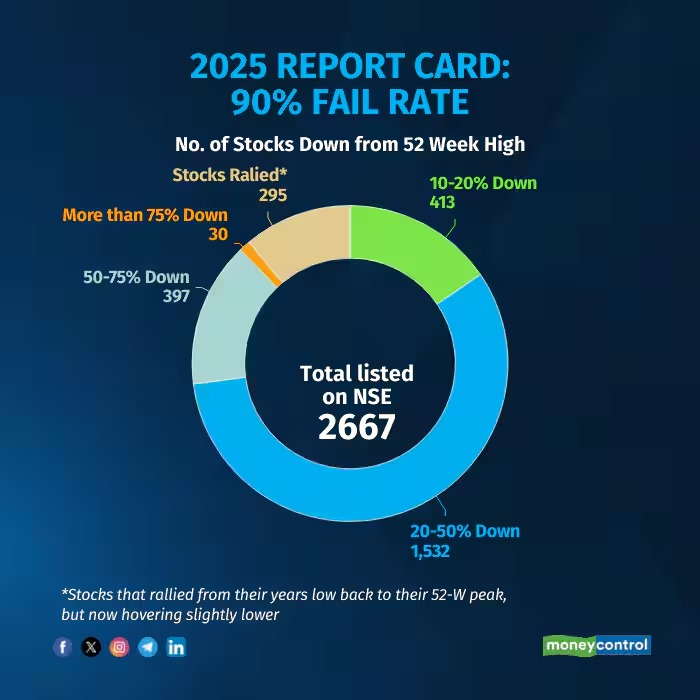
Chart Ki Baat

Image

Gyaan Ki Baat 

Planning in an Unpredictable World

Ronald Reagan once joked about Soviet life, where a man had to wait 10 years to collect a car. When asked whether he should come in the morning or afternoon, he replied, “The plumber is scheduled that morning.” The absurdity highlights a harsh truth: life under unpredictable systems isn’t about waiting—it’s about the impossibility of planning rationally.

Today, we see similar challenges globally. Take the recent H-1B visa fee hike in the U.S.—a 2,000% increase overnight. Indian professionals abroad suddenly face life-altering decisions: move now or later, manage careers, children’s education, and family health—all under uncertainty. Businesses are no different. Erratic trade policies and shifting tariffs make long-term investment decisions nearly impossible. A company cannot plan factory builds or supplier contracts when trade rules can flip in months.

The bigger cost isn’t the policy itself—it’s the behavioural change it triggers. Companies become ultra-conservative, delay expansion, diversify excessively, and hoard cash. Families rethink careers, travel, and education. Even when policies stabilize, the caution lingers, slowing growth and efficiency.

For investors and entrepreneurs, the lesson is clear: unpredictability is as much an economic drag as any tax or tariff. The winners will be those who adapt quickly, stay flexible, and plan for multiple scenarios. Like the man waiting ten years for his car, success comes not from controlling the world, but from learning to navigate it intelligently.

In an unpredictable world, the smartest move isn’t rushing blindly—it’s planning wisely, adapting continuously, and staying prepared for whatever comes next.

Personal Finance

  • Starting young with insurance: How much cover do you really need? Should you buy life cover in your 20s, and can freelancers get health insurance that covers therapy? An expert explains how to secure affordable protection without overcommitting. Read here

  • RBI issues directions for digital payment transaction authentication mechanism: The Reserve Bank of India (RBI) has issued new guidelines for digital payment authentication, effective April 1, 2026, mandating two-factor authentication for all transactions. These guidelines emphasize dynamic authentication factors, risk-based checks, and validation of cross-border transactions. Issuers must implement mechanisms for handling cross-border CNP transactions by October 1, 2026, and register their BINs with card networks. Read here

  • Credit cards vs BNPL in India: Which is better for you in 2025? In 2025, smart spending is all about choosing between Credit Cards and BNPL. Cards give rewards and global perks, while BNPL offers quick, interest-free instalments. Discover which one fits your lifestyle—and how combining both could boost your finances! Read here

Investing

  • Why the 5% Rule is the New 4% Rule: Think the 4% Rule limits your retirement? Bill Bengen’s new book reveals you could safely spend more—maybe even retire sooner—and finally enjoy your golden years worry-free! Read here

  • China’s Rising Yuan: How De-Dollarization Is Reshaping Global Trade: In just 15 years, China has shifted nearly half of its cross-border trade to the yuan. De-dollarization is accelerating, global trade is evolving, and the world’s financial order may never look the same. Read here

  • The Rise and Fall of Options Trading by Indian Retail Investors: Retail options trading in India surged eight-fold from 50M to 375M contracts in just a few years—but volumes have now tumbled back to 80M. Market frenzies are temporary; skill, discipline, and caution remain key. Read here

Economy & Sector

  • ​Consumption conundrum: On the Indian economy’s predicament: With private investment sluggish and exports under pressure, the government is re-prioritizing household consumption to drive growth. GST reforms and income-tax cuts help but boosting spending also requires higher wages and targeted fiscal support. Consumption is now the engine India must rely on. Read here
  • India, US make ‘progress’ for joint trade-oil deal as talks move forward: Amid U.S. tariffs pressuring India over Russian oil purchases, Secretary of State Marco Rubio says progress was made in recent trade discussions. Negotiations continue, covering tariffs, skilled worker access, and market reforms. Read here

  • India pegs its logistics cost lower than China in terms of percentage of GDP: India’s logistics cost stands at 7.97% of GDP, lower than China, driven by rail efficiency and reforms. Initiatives like freight corridors and Gati Shakti are gradually reducing costs and improving multimodal connectivity. Read here

****
That’s it from our side. Have a great weekend ahead!

If you have any feedback that you would like to share, simply reply to this email.

The content of this newsletter is not an offer to sell or the solicitation of an offer to buy any security in any jurisdiction. The content is distributed for informational purposes only and should not be construed as investment advice or a recommendation to sell or buy any security or other investment or undertake any investment strategy. There are no warranties, expressed or implied, as to the accuracy, completeness, or results obtained from any information outlined in this newsletter unless mentioned explicitly. The writer may have positions in and may, from time to time, make purchases or sales of the securities or other investments discussed or evaluated in this newsletter.
CAGR Insights – 19 Sep 25

CAGR Insights is a weekly newsletter full of insights from around the world of the web.

Image

Chart Ki Baat

Image

Gyaan Ki Baat 

Knowledge Grows by Subtraction

Nassim Nicholas Taleb once said, “Knowledge grows by subtraction much more than by addition – what we know today might turn out to be wrong, but what we know to be wrong cannot turn out to be right, at least not easily.” This insight perfectly captures the challenge facing today’s investors, particularly in India.

Three decades ago, investing in mutual funds was simple – most people didn’t know they existed. The job was to explain the basics: what a mutual fund is, what NAV means, and how investments grow. It was a process of addition, building knowledge from scratch.

Today, the landscape is dramatically different. Financial information is abundant, yet much of it is misleading. Investors arrive armed with technical analysis charts, complex derivatives strategies, and market-timing opinions, often confident in knowledge that is fundamentally flawed. SEBI data shows 89% of derivatives traders lose money, highlighting how sophisticated knowledge can become a liability if built on misconceptions. Similarly, many can read charts fluently but lack understanding of the businesses behind the stocks.

The real challenge now is subtraction – helping investors unlearn dangerous ideas before teaching sound principles. Simple truths, like buying quality businesses, staying diversified, and maintaining patience, are overshadowed by the allure of complex strategies and speculation. Warren Buffett’s advice – focusing on business fundamentals rather than price predictions – remains countercultural yet timeless, surviving the subtraction test.

In today’s information-saturated world, the wisest investment strategy isn’t learning more techniques, but developing the discipline to discard appealing but harmful misconceptions. True financial wisdom comes not from accumulation but from clarity, honesty, and the courage to unlearn what doesn’t serve long-term wealth creation.

Personal Finance

  • 25 personal finance hacks the rich don’t tell you: Got a bonus or tax refund? The rich don’t rush to buy the latest gadget. Instead, they invest unexpected money into SIPs, stocks, or debt funds, turning temporary cash into long-term wealth. Read here

  • Why ignoring your credit score can cost more than you think: Ignoring your credit score may seem harmless, but experts warn it can lead to hidden costs, loan rejections, and even fraud risks. As India’s digital credit ecosystem grows, monitoring your report is becoming essential for financial stability.Read here

  • How to save LTCG tax when selling mutual funds and property u/s 54 and 54F: If you redeem your equity mutual funds and earn long-term capital gains (LTCG), you can claim an exemption under Section 54F by investing the gains in a new residential property. But what happens when you own more than one house? Read here

Investing

  • Global Bond Yields Surge: What It Means for Investors: Global 30-year bond yields are surging across major economies despite expected rate cuts, signalling market risk and potential financial stress. Could this yield spike trigger a global market shock? Read here

  • Are Quality Stocks in a Bubble? Even top-quality companies may deliver poor returns as valuations hit extreme levels. Are you overpaying for safety? Find out why a strategy, not just quality, matters. Read here

Economy & Sector

  • GST reforms set to reignite consumption growth, spur corporate profitability: India is set to implement new Goods and Services Tax reforms. These reforms aim to simplify tax structure and boost spending. Revised rates will take effect from September 22, 2025. Experts believe that the reforms will play a key role in addressing the demand challenges. Lower taxes on essential and processed goods will create savings for consumers and improve spending and consumption. Read here
  • How is India’s economy resilient amidst global uncertainties? At a time when global uncertainties are mounting, India stands out. Real GDP growth at 7.8%, record GST collections, and stable inflation. All this resulted in India’s sovereign rating being upgraded by Fitch after 18 years. What differentiates India from rest of others is its strong domestic consumption (60% of GDP), strategic policy frameworks, a diversified economy, and an active approach to modernisation in critical sectors such as manufacturing and services. Read here
  • How regulation is shaping a sustainable crypto assets sector in India: India’s crypto sector is on a sustainable path through robust government regulations and industry self-regulation. Could this model make India a global crypto leader? Discover how the framework works. Read here

****
That’s it from our side. Have a great weekend ahead!

If you have any feedback that you would like to share, simply reply to this email.The content of this newsletter is not an offer to sell or the solicitation of an offer to buy any security in any jurisdiction. The content is distributed for informational purposes only and should not be construed as investment advice or a recommendation to sell or buy any security or other investment or undertake any investment strategy. There are no warranties, expressed or implied, as to the accuracy, completeness, or results obtained from any information outlined in this newsletter unless mentioned explicitly. The writer may have positions in and may, from time to time, make purchases or sales of the securities or other investments discussed or evaluated in this newsletter

CAGR Insights – 12 Sep 25

CAGR Insights is a weekly newsletter full of insights from around the world of the web.

Image

Chart Ki Baat

Image

Gyaan Ki Baat 

The Wealth Gap You Don’t See

At a recent get-together, Meera and Rohan noticed a pattern. While most of their friends spent the evening discussing school admissions, tuition fees, and rising child expenses, the couple — both in their 30s, working in IT — stayed quiet. Not because they had nothing to add, but because their financial reality looks very different. They’ve chosen the DINK lifestyle — Double Income, No Kids.

At first glance, it may look like just a lifestyle choice. But financially, it’s a game-changer. With a household income of ₹30 lakh, Meera and Rohan spend about ₹18 lakh a year and invest the remaining ₹12 lakh into SIPs. At a conservative 12% return, they could build a corpus of ₹17 crore in 25 years — enough to retire nearly a decade early.

Now compare that with a similar couple raising a child. Monthly child-related costs like school fees, food, healthcare, and an education corpus easily eat up over ₹42,000 every month. This shrinks their investible surplus from ₹1 lakh to about ₹58,000. Over 25 years, that difference compounds into a staggering gap of more than ₹7 crore.

But here’s the real takeaway: the advantage isn’t simply in not having kids. It’s in what you do with the surplus. DINK couples who give in to lifestyle inflation — bigger cars, luxury vacations, premium apartments — lose the same edge.

The true gyaan? Financial freedom isn’t about whether you have kids or not. It’s about discipline. Channel your savings into consistent, goal-based investments — and let compounding do the heavy lifting.

Personal Finance

  • Can you change your tax regime from new to old and vice-versa, while filing ITR? Not always: For FY 2024-25, the new tax regime is the default, impacting ITR filing. Switching to the old regime requires careful consideration, especially for those with business income who must file Form 10-IEA before the due date. While revised ITRs allow regime changes, belated ITRs restrict this option, emphasizing the importance of timely filing. Read here

  • RBI may allow banks to lock the phones bought on credit if buyer defaults on repayment: Report: Last year, the Reserve Bank of India asked lenders to halt locking phones of defaulting borrowers, the sources said. The practice involved using an app installed at the time of loan issuance to lock the devices. Read here

  • No generational wealth, how a Reddit user grew net worth to Rs 60 lakh; check details: A Redditor explains his journey from a Rs 5,000 salary to a net worth of Rs 60 lakh through disciplined financial habits, highlighting the role of structured investments and strategic risk management. Read here

Investing

  • The Bar Only Gets Higher: Wealth-building is tougher than ever—global rivals, soaring costs, and AI raise the bar. But persistence beats all. Want to know the hidden edge to thrive today? Read here

  • How FIIs Have Played the Indian Market: FIIs master the art of buying low, selling high, and shifting between equity and debt. Want to know the biggest lesson they teach Indian investors? Read here

Economy & Sector

  • India’s Real Estate to scale up office and industrial assets beyond 2 billion sq ft by 2047: India’s real estate is set to scale into a $5–10 trillion market by 2047, driven by urbanization, demographics, tech, and sustainability. Curious how each asset class will transform? Read here
  • GST reform: Indian companies likely to witness up to 7% growth in revenues after new rates, says Crisil: Research agency Crisil says that due to the reduced goods and services tax (GST) rates, Indian companies are expected to witness a 6-7% rise in revenues in the financial year 2025-26. The new GST structure will be effective from 22 September 2025. Read here

  • India plans to put large infra projects in fast lane: India is accelerating its infrastructure development with a focus on mega-projects like bullet trains, shipbuilding yards, and access-controlled highways, aligning with the Viksit Bharat 2047 vision. The government aims to boost economic growth through infrastructure creation, encouraging public-private partnerships to moderate spending. Ministries are directed to expedite project approvals, with a high-level committee reevaluating goals for faster clearances. Read here

****
That’s it from our side. Have a great weekend ahead!

If you have any feedback that you would like to share, simply reply to this email.

The content of this newsletter is not an offer to sell or the solicitation of an offer to buy any security in any jurisdiction. The content is distributed for informational purposes only and should not be construed as investment advice or a recommendation to sell or buy any security or other investment or undertake any investment strategy. There are no warranties, expressed or implied, as to the accuracy, completeness, or results obtained from any information outlined in this newsletter unless mentioned explicitly. The writer may have positions in and may, from time to time, make purchases or sales of the securities or other investments discussed or evaluated in this newsletter.